



By Dook International | Updated September 2026 | 16 min read | Sources: Vietnam Immigration Department (evisa.gov.vn), VietnamTourism.com, Rough Guides — all verified 2026
Article Summary
Vietnam is slowly emerging as one of the best value destinations for international vacations that Indians can take. This is because of a 3-day Vietnam e-Visa, a cheaper-than-usual currency when compared to all Asian countries, and three distinctly different climates in one long nation. This comprehensive guide will help you figure out Vietnam e-Visa costs, the right time to travel in each region (the most common mistake when planning a trip to Vietnam), locations that should be visited, and their INR costs per day for seven and ten-day trips.
| Vietnam 2026: Fast Facts for Indian Travellers |
| Visa required? | YES — e-Visa mandatory for all Indians except a Phu Quoc-only exception (see below) |
| e-Visa fee | USD 25 single entry / USD 50 multiple entry (approx Rs 2,150 / Rs 4,300) |
| e-Visa processing time | 3-5 working days standard; 7-10 days during Tet (Lunar New Year) and Indian holiday peaks |
| e-Visa validity | Up to 90 days from date of entry, single or multiple entry |
| Visa-free exception | Phu Quoc Island only — 30 days visa-free if flying DIRECT to Phu Quoc International Airport and staying only on the island |
| Best overall month | Late February to March — the only window with good weather across all three regions simultaneously |
| 7-day trip cost (budget) | Rs 35,000-55,000 per person, including flights |
| 7-day trip cost (mid-range) | Rs 60,000-1,00,000 per person, including flights |
| Currency | Vietnamese Dong (VND). Rs 1 = approx 275-290 VND (2026). UPI does NOT work in Vietnam — cash and cards only. |
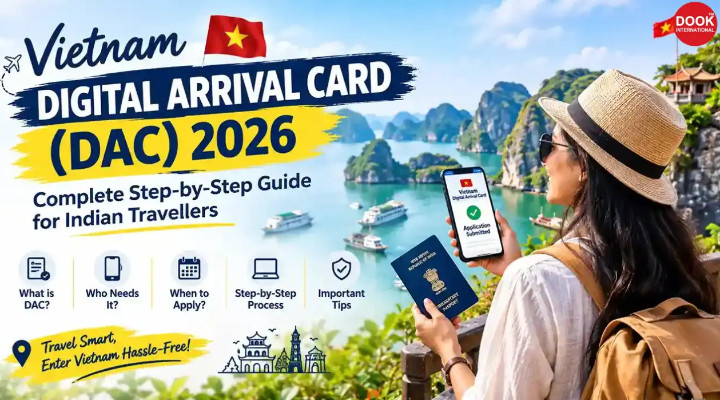
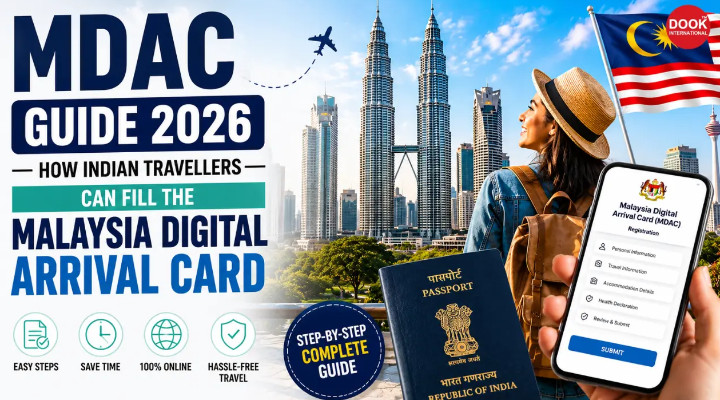
| Arrival requirement | Vietnam Digital Arrival Card (DAC) mandatory at all major airports since 2026 — separate from the e-Visa |
Unlike Thailand or Bali, Vietnam is not a destination discussed when Indians talk about their travels overseas. However, this lack of popularity is precisely why Vietnam should be considered – the country offers incredible diversity within a strip of a coast, with everything from the mist-covered limestone formations in Ha Long Bay in the north, the lantern-filled ancient city of Hoi An in the middle, and the bustling Ho Chi Minh City in the south. From three regions, three different climates, and a currency that will stretch even more than in most of the other popular Indian outbound destinations.
What makes Vietnam travel truly affordable for Indian tourists in 2026 is the simple visa process and outstanding value – with proper budgeting, a holiday that will include flights, accommodations, local cuisine, and sightseeing can comfortably be under Rs 55,000, which is less expensive than some domestic tours within India.
This guide offers information about everything related to planning a vacation in Vietnam, including the 2026 visa requirements, the best time of year to visit each of the regions (which is the first and the biggest mistake people make while trying to organize a vacation in Vietnam), the places you absolutely must see, and the actual cost of the holiday.
Vietnam Visa for Indians 2026: Everything You Need
Every Indian passport holder needs a visa to enter Vietnam — there is no bilateral visa-free arrangement between the two countries. The e-Visa is by far the simplest and most common route.
| e-Visa Detail | Specification |
| Official portal | evisa.gov.vn — the ONLY legitimate government portal. Beware of look-alike agent sites charging Rs 5,000+ for a service costing Rs 2,150. |
| Fee | USD 25 (single entry) or USD 50 (multiple entry) — non-refundable even if declined |
| Processing time | 3-5 working days standard. Apply at least 7-10 days before travel to allow buffer for peak periods (Tet, Indian festival season) |
| Documents needed | Passport valid for 6+ months with 2 blank pages, digital passport photo (4x6cm, white background), scanned passport bio page |
| Entry ports | Accepted at all 83 approved airports, land borders, and seaports across Vietnam |
| Stay permitted | Up to 90 days per entry — single or multiple entry as selected |
The Phu Quoc Visa-Free Exception
Indian citizens can enter Vietnam completely visa-free for up to 30 days if flying DIRECT to Phu Quoc International Airport and staying only on Phu Quoc Island. The moment you leave the island for mainland Vietnam, this exemption no longer applies, and you need a full e-Visa. This is a genuinely useful option for a pure beach holiday but not for anyone planning to see Hanoi, Ha Long Bay, or Ho Chi Minh City on the same trip.
The DAC must also be obtained separately, freely, and prior to flying at the major airports of Vietnam – note that this is different from the e-Visa and should be done prior to flying into the country. See Dook's guide to Vietnam's DAC 2026 for the full process, as failing to do so could cause you trouble at Ho Chi Minh City, Hanoi, Da Nang, and Phu Quoc airports despite having an e-Visa.
Watch Out: Third-Party Visa Sites
There are many online platforms that will demand Rs 5,000-8,000 for the Vietnam e-Visa application process that requires a fee of USD 25 (approximately Rs 2,150). Please ensure that you log in on the legitimate website with a .gov.vn extension to avoid being scammed. The payment method involves the use of an international credit/debit card.
Best Time to Visit Vietnam: The Region-by-Region Guide Most Articles Get Wrong
This is the biggest mistake that can be made in planning a trip to Vietnam. The nation spans 1,600 kilometers from top to bottom, and each region has distinctly different climatic zones based on a separate calendar. A general 'optimal time to visit Vietnam' is basically useless – it is all about which regions you will visit.
| Region | Best Time | Temperature | Key Places |
| North (Hanoi, Ha Long Bay, Sapa, Ninh Binh) | Feb-Apr (spring) and Sep-Nov (autumn) | 18-25°C — mild and comfortable | Hanoi Old Quarter, Ha Long Bay cruise, Sapa rice terraces, Ninh Binh caves |
| Central (Hoi An, Da Nang, Hue, Nha Trang) | Feb-Aug (dry season, fewer typhoons) | 24-34°C — warm, good for beaches | Hoi An ancient town, Da Nang beaches, Hue's imperial city, Ba Na Hills |
| South (Ho Chi Minh City, Mekong Delta, Phu Quoc) | Dec-Apr (dry season) | 25-34°C — consistently warm year-round | Ho Chi Minh City, Mekong Delta boat tours, Phu Quoc beaches, Con Dao |
The One Month That Works Everywhere: Late February to March
If your itinerary covers all three regions — the classic Hanoi to Ho Chi Minh City route — late February to March is the only genuine sweet spot where the North is pleasantly mild, the Centre is dry and sunny, and the South is warm without being unbearably hot. Note: Tet (Lunar New Year, falling on February 17, 2026) causes widespread closures, packed trains, and inflated domestic flight prices for about a week either side — plan around it, not during it.
If you can only pick one region, the decision becomes simpler:
• Visiting only the North: March to April or September to November. Avoid June-August (hot, stormy — Ha Long Bay cruises are sometimes cancelled for rough seas) and avoid deep winter (December-January brings genuine cold and mist in Hanoi and Sapa, sometimes obscuring Ha Long Bay views entirely).
• Visiting only Central Vietnam: February to May, or June-August for peak beach weather in Da Nang and Hoi An. Avoid September-November — this is typhoon season and can bring flooding to Hoi An's riverside old town.
• Visiting only the South: December to April is dry season with the most reliable weather. May-October is the wet season with short, heavy afternoon downpours — inconvenient but rarely trip-ruining, since mornings are usually clear.
Best Places to Visit in Vietnam: What Actually Deserves Your Time
Hanoi – The Cultural and Culinary Capital
The Vietnamese capital is a city designed to be explored on foot – 36 streets that formed the core of the Old Quarter, each specializing in one trade and turned into a labyrinth of food vendors, cafes, and colonial buildings. The focal point of the old town is Hoan Kiem Lake, and the Temple of Literature – Vietnam's first university, established in 1070 – is considered one of the most significant historical sites in the whole country. The egg coffee (ca phe trung) and bun cha (grilled pork with vermicelli) are must-try foods in Hanoi.
Ha Long Bay – The UNESCO Icon
More than 1,960 limestone islands that emerge from green water, Ha Long Bay is one of the most photographed natural wonders of Southeast Asia. An overnight cruise (the usual way of enjoying Ha Long Bay) includes kayaking in secret lagoons, exploring caves, and watching sunrise/sunset from the deck. Be sure you arrange a high-quality cruise, because quality varies a lot between providers of comparable prices.
Sapa – The Rice Terrace Highlands
Terraced rice paddies carved into the mountains by ethnic minorities over centuries are Vietnam's answer to the truly unique landscape. The cool mountain climate, walking routes around Hmong and Dao villages, and the breathtaking panoramas are the reason why Sapa is often called the Switzerland of Vietnam. Sapa is best visited during September-October (the harvest golden rice paddies) or March-May (rice planting).
Hoi An – The Lantern Town
An ancient UNESCO World Heritage town known as a home of colorful silk lanterns lighting the streets and canals every evening, Hoi An is the most photogenic destination in Vietnam and the most delicious city of the country, excluding Hanoi. The riverside Old Town, the Japanese Covered Bridge and the monthly Lantern Festival (on the full moon day) are the highlights not to miss on almost any Vietnam trip. Tailoring – Hoi An is known for custom-made suits and dresses done in the very same day – is another reason why travelers tend to prolong their stay.
Da Nang – Beaches and Ba Na Hills
Da Nang features not only some of the best city beaches of Vietnam but also the surrealistic Ba Na Hills – a French colonial hill station accessible by the world's longest cable car. The famous Golden Bridge on the Ba Na Hills is held by the giant hands. The most livable and modern city of Vietnam, Da Nang can serve as a comfortable base for visiting Hoi An and Hue.
Ho Chi Minh City – The Energy Capital
Vietnam's capital runs on motorbikes, rooftop bars, and an equally vibrant food scene to Bangkok. The War Remnants Museum and Cu Chi tunnels provide a somber historical background, while Ben Thanh Market and the French colonial architecture (Notre-Dame Cathedral, Central Post Office) add a completely different flavor to the southernmost part of Vietnam. This is the usual starting point for visiting the Mekong Delta.
Phu Quoc – The Beach Island Getaway
The biggest island of Vietnam, located off the southern coast near Cambodia, is notable for its excellent beaches, developing luxurious resort scene and visa-free entrance privilege mentioned above. Sao Beach and Long Beach are the best of those. And the cable car taking you to Hon Thom Island is currently the world's longest over-sea cable car.
Vietnam Trip Cost from India: Honest 7-Day INR Breakdown
Vietnam is genuinely one of the best-value international destinations available to Indian travellers — the rupee stretches roughly 275-290 VND, making even mid-range experiences feel inexpensive.
| Expense (7 Days) | Budget | Mid-Range | Premium |
| Return flights (India-Vietnam) | Rs 18,000-30,000 | Rs 25,000-40,000 | Rs 40,000-70,000 |
| e-Visa | Rs 2,150 (fixed) | Rs 2,150 | Rs 2,150 |
| Accommodation (6 nights) | Rs 7,000-12,000 | Rs 15,000-30,000 | Rs 45,000+ |
| Food (per day) | Rs 500-800 | Rs 1,000-1,500 | Rs 2,500+ |
| Local transport | Rs 2,500-4,000 | Rs 5,000-8,000 | Rs 12,000+ |
| Activities (Ha Long Bay, etc.) | Rs 5,000-8,000 | Rs 10,000-18,000 | Rs 25,000+ |
| Total (approx.) | Rs 35,000-55,000 | Rs 60,000-1,00,000 | Rs 1,45,000+ |
Money-Saving Notes
Kolkata and Chennai are consistently the cheapest Indian departure cities to Vietnam, with fares 20-30% lower than Delhi or Mumbai.
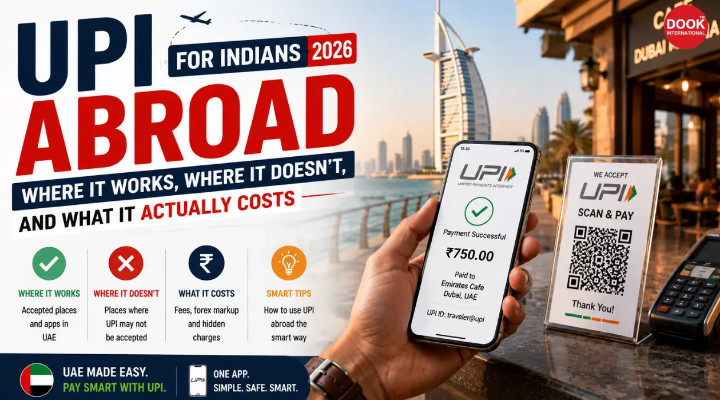
UPI does NOT work in Vietnam. Cash (VND) and cards are your only options — see Dook's UPI abroad guide for the full list of countries where UPI does work, and the forex cards guide for the best card options for Vietnam specifically.
Domestic flights within Vietnam (Hanoi-Da Nang-Ho Chi Minh City) start around Rs 2,500-6,000 one-way — often cheaper and faster than overland travel for a multi-city itinerary.
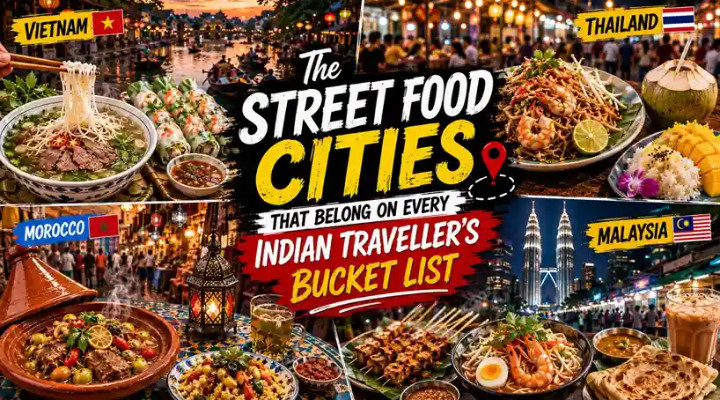
Street food is dramatically cheaper than restaurant dining and, in Vietnam, is genuinely some of the best food in the country — a proper meal costs Rs 100-400.
Practical Guide: Money, Food and Getting Around
• Currency: Vietnamese Dong (VND) is the only accepted currency for street purchases, local restaurants, and small businesses. US dollars are accepted at major hotels and upscale restaurants but not at street level. Exchange at licensed counters, not airport kiosks, for better rates.
• Cards vs cash: Cards work at hotels, malls, and established restaurants in major cities. Street food, local markets, and rural areas are cash-only. See Dook's cash limits abroad guide for RBI rules on carrying foreign currency, and the best forex cards for Indians guide for the right card to carry as backup.
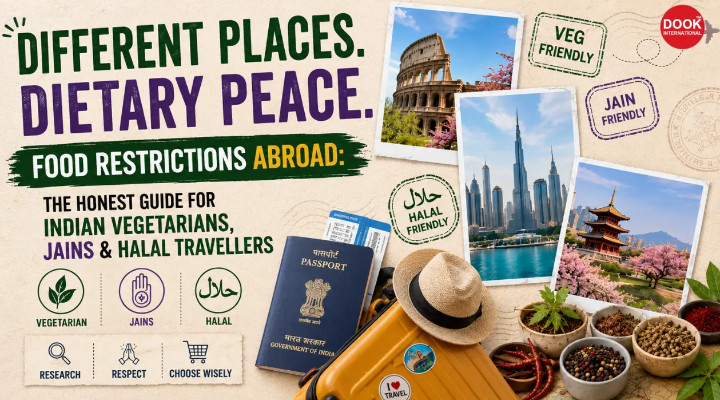
• Food for vegetarians and Jains: Vietnamese cuisine relies heavily on fish sauce (nuoc mam) in most dishes, making it genuinely challenging for strict vegetarians. Dedicated vegetarian restaurants exist in Hanoi and Ho Chi Minh City (search for 'chay' — the Vietnamese word for vegetarian). See Dook's honest guide on food restrictions abroad for Indian vegetarians, Jains and Halal travellers for country-specific strategies.
• Getting around: Grab (Southeast Asia's ride-hailing app) works reliably in all major Vietnamese cities and is significantly cheaper and more predictable than street taxis. Sleeper buses connect cities overnight at low cost. Domestic flights are the fastest option for the full north-south route.
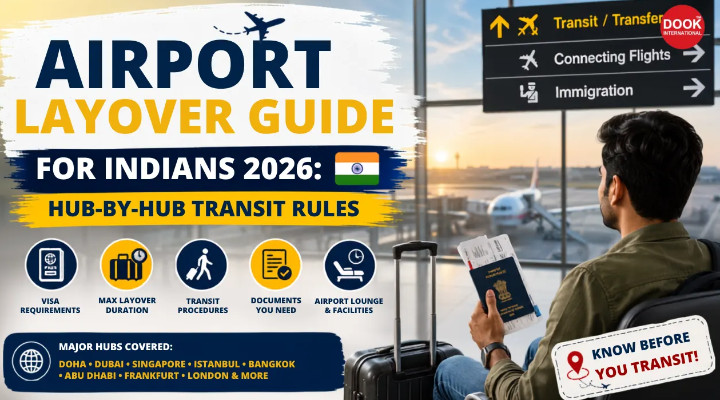
• Connecting flights: Most Indian routes to Vietnam connect through Singapore, Bangkok, or Kuala Lumpur. If your layover involves a Schengen or other transit-visa jurisdiction, see Dook's Airport Layover Guide for Indians for hub-specific transit rules.
Pre-Departure Checklist for Vietnam
• Indian passport: Valid 6+ months from arrival date, minimum 2 blank pages
• e-Visa: Applied at evisa.gov.vn, approved, PDF printed (two copies)
• Vietnam Digital Arrival Card: Submitted before departure — see Dook's dedicated DAC guide for the exact process
• Cash: VND exchanged or arranged via ATM withdrawal on arrival — UPI will not work
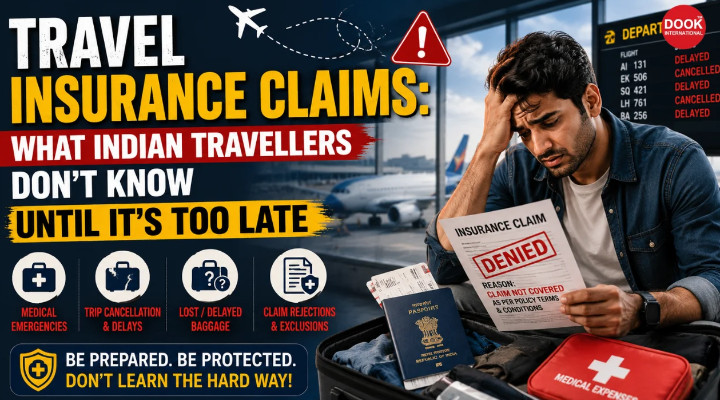
• Travel insurance: See Dook's guide on travel insurance for international trips for what a Southeast Asia policy should cover
• Weather-appropriate packing: Check your specific regions against the seasonal table above — Vietnam's north-south climate range means one packing list rarely fits the whole trip
Ready to Plan Your Vietnam Trip from India?
Dook International offers fully customised Vietnam tour packages from India — flights, hotels, guided tours across Hanoi, Ha Long Bay, Hoi An, and Ho Chi Minh City, with complete visa and Digital Arrival Card documentation support so you land prepared.

 Admin
Admin 







 Hassle-free booking and best price guaranteed
 24/7 support available
 Hand-picked tours & activities
 Free travel insurance
 sales@dooktravels.com
 +918368513675