







By Dook International | Updated August 2026 | 14 min read | Medically reviewed against licensed GP guidance from Bali Doc (August 2026) and Qoctor Australia (August 2026)
This article is for general informational purposes only and does not constitute medical advice. Consult a qualified healthcare professional for diagnosis and treatment.
Article Summary
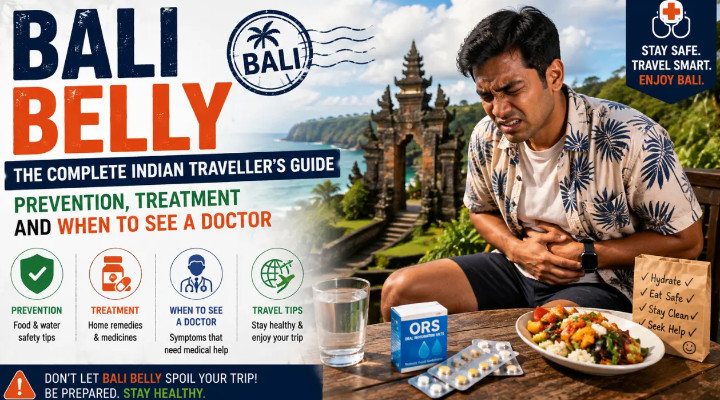
Bali Belly — traveller's diarrhea from contaminated food or water — is the most common health complaint among tourists in Bali. Most cases resolve in 2–4 days with oral rehydration salts, rest, and a bland diet. But without the right response, symptoms can last 3–7 days and ruin your trip. This guide covers exactly what Indian travellers need to know: what to pack from India, what to avoid in Bali, how to treat it fast if it hits, and the five red flags that mean you need a doctor immediately.
| Bali Belly: Fast Facts |
| What it is | Traveller's diarrhea caused by consuming food or water contaminated with unfamiliar bacteria, viruses, or parasites |
| Who gets it | Estimated 30–70% of Bali visitors depending on season, accommodation standard, and dietary choices |
| When symptoms start | 6–24 hours after consuming contaminated food or water (bacterial); up to 3 days (viral/parasitic) |
| How long it lasts | Mild: 1–2 days | Moderate: 3–4 days | Severe/parasitic: 5–10 days without treatment |
| Most common cause | E. coli bacteria from contaminated water or undercooked food |
| Primary treatment | Oral Rehydration Salts (ORS) + rest + BRAT diet. Most cases do not need antibiotics. |
| Antibiotic required? | Only for confirmed or severe bacterial cases — prescribed by a doctor, not self-medicated |
| See a doctor if | High fever, blood in stool, unable to keep fluids down, symptoms beyond 3–4 days, or severe dizziness |
| ORS in India (pack these) | Electral powder sachets, Pedialyte, or any WHO-formula ORS — available at any Indian pharmacy |
| ORS in Bali | Oralit (standard pharmacy), Pocari Sweat (acceptable substitute), coconut water (supplement) |
You have landed in Bali, checked into your villa, and spent the first day doing everything right — temples in the morning, sunset in Seminyak, a smoothie bowl that looked Instagram-perfect. Then, somewhere around 2 AM, your stomach delivers its verdict on one of those choices.
Bali Belly is the colloquial name for traveller's diarrhea in Bali — an intestinal infection caused by consuming food or water contaminated with bacteria, viruses, or parasites that your digestive system has not previously encountered. Bali's local population has built immunity to these microorganisms over a lifetime of exposure. Visitors have not. The result is that between 30% and 70% of tourists in Bali experience some degree of gastric disruption, with Indian travellers being among the most affected.
The good news: most cases resolve in 2–4 days with the right response and do not require a doctor or antibiotics. The more important news for Indian travellers specifically: knowing what to pack from India before you fly, what to avoid in Bali, and what the five red flags for serious illness look like — makes the difference between losing half a day and losing half a week.
If you are still in the planning stage of your Bali trip, start with Dook's Bali Visa on Arrival guide for Indians for the complete entry requirements — then come back to this guide for the health preparation every Bali traveller needs.
What Is Bali Belly — And Why Indian Travellers Are Specifically Vulnerable
Bali Belly is not a single disease — it is a cluster of gastrointestinal symptoms caused by one of three categories of microorganisms, each with different characteristics, different durations, and different treatment needs.
| Cause | Common Sources | Onset | What Makes It Different |
| Bacteria (E. coli, Salmonella, Campylobacter) | Undercooked meat, unwashed salads, contaminated water, ice made from tap water | 6–24 hours | Most common cause. Responds to antibiotics if severe. Most cases resolve in 2–4 days. |
| Viruses (Norovirus, Rotavirus) | Contaminated surfaces, shared utensils, infected food handlers | 12–48 hours | Causes sudden, severe vomiting and diarrhea. Antibiotics DO NOT work on viruses. Rest and hydration only. |
| Parasites (Giardia, Cryptosporidium) | Swallowing contaminated water — swimming, brushing teeth with tap water | 1–3 weeks incubation | Symptoms last much longer (1–2 weeks+), with severe bloating and sulfur-smelling gas. Requires specific anti-parasitic medication from a doctor. |
Indian travellers face a specific vulnerability that most Bali health articles written for Western audiences do not address. Indian digestive systems are adapted to Indian bacterial flora — which is distinct from Balinese local bacteria. While Indian travellers may handle spice and heat better than Western visitors, the specific strains of E. coli and other bacteria in Bali's water and food supply are unfamiliar to the Indian gut, triggering the same immune response.
A second India-specific factor: many Indian travellers in Bali actively seek out Indian restaurants for comfort. Some of these are excellent. Others serve food prepared with local tap water for washing vegetables, making ice, and cooking rice — creating risk even within familiar-looking meals.
Bali Belly Symptoms: Recognising the Three Severity Levels
Symptoms typically begin within 6–24 hours of consuming contaminated food or water. The pattern is usually recognisable quickly:
| Severity | Symptoms | Typical Duration | What to Do |
| Mild | Loose stools 3–4 times/day, mild stomach cramps, low-grade nausea, fatigue | 1–2 days | ORS + rest + BRAT diet. No medication usually needed. |
| Moderate | Frequent diarrhea 5–8 times/day, vomiting, cramping, weakness, low fever (below 38.5°C) | 3–4 days | ORS aggressively + loperamide for symptom control + bland diet. See a doctor if no improvement after 48 hours. |
| Severe | Diarrhea 8+ times/day, unable to keep fluids down, high fever (38.5°C+), blood or mucus in stool, dizziness, confusion | 5–7 days+ without treatment | See a doctor immediately. IV rehydration may be needed. Do not self-medicate with antibiotics — get tested. |
⚠️ The Five Red Flags — See a Doctor Immediately If You Have Any of These
1. Blood or mucus in your stool — this indicates a more serious bacterial infection or parasitic cause
2. High fever above 38.5°C (101.3°F) — indicates systemic bacterial infection requiring medical assessment
3. Dizziness when standing, extreme dry mouth, no urination for 6+ hours — signs of serious dehydration
4. Unable to keep any fluids down — vomiting prevents ORS from working; IV rehydration needed
5. No improvement after 3–4 days — possible parasitic infection or antibiotic-resistant bacteria requiring stool testing
Prevention: What Indian Travellers Should Do Before and During Their Bali Trip
What to Pack from India (Before You Fly)
These items are significantly cheaper in India than in Bali, and having them ready means you respond to symptoms in the first hour rather than searching for a pharmacy at 3 AM.
| Items to Pack from India | What It Does and Why |
| ORS sachets (Electral, WHO-formula ORS) | The single most important item. Mix with 1 litre of bottled water at the first sign of loose stools. Electral is widely available at Indian pharmacies for Rs 20–30/sachet. Pack 10–15 sachets minimum. |
| Loperamide (Imodium or Eldoper) | Slows bowel motility — useful for symptom control when you need to travel or function. Does NOT treat the underlying infection. Do not use if you have blood in stool or high fever. Available OTC at Indian pharmacies. |
| Probiotics (Lactobacillus or Saccharomyces boulardii) | Starting probiotics 2–3 days before travel and continuing throughout your trip has shown evidence of reducing Bali Belly severity and duration. Gut Microbiome capsules or Saccharomyces boulardii (Florastor) available at Indian pharmacies. |
| Domperidone (anti-nausea) | Controls nausea and vomiting. Available OTC in India. Helps when vomiting is preventing ORS intake. |
| Paracetamol 500mg | For fever and cramps. Do not use ibuprofen if you have diarrhea — NSAIDs can irritate the gut lining further. |
| Activated charcoal capsules | May help absorb toxins in the early stage of bacterial illness. Available at Indian pharmacies. Not a substitute for ORS. |
| Hand sanitiser (60%+ alcohol) | Carry and use constantly. The most effective single prevention habit is hand washing before every meal and after every bathroom visit. |
| Oral zinc tablets (20mg for adults) | WHO recommends zinc supplementation during acute diarrhea — reduces duration and severity. Zinc sachets available at Indian pharmacies cheaply. |
Note on Antibiotics
Do not pack antibiotics from India without medical advice and a prescription. Azithromycin and ciprofloxacin are the antibiotics most commonly prescribed for Bali Belly — but using them incorrectly (wrong type, wrong dose, or when the cause is viral or parasitic) creates antibiotic resistance and can make you worse. If you are a frequent traveller to high-risk destinations and your doctor recommends carrying standby antibiotics, follow their specific guidance. Do not self-prescribe.
Food and Water Rules in Bali — The Honest List
The contamination risk in Bali is not from Balinese food specifically — it is from water. Bali's tap water is not treated to drinking standards. Bacteria can be present in ice, food washed with tap water, and even drinks made with local water. This applies at all price points, including mid-range restaurants.
| Safe — Lower Risk | Avoid — Higher Risk |
| Bottled mineral water (sealed cap) — Aqua is Bali's most trusted brand | Tap water — including for brushing teeth. Use bottled water. |
| Hot food cooked and served immediately | Ice in drinks unless confirmed 'purified ice' at high-end venues |
| Peeled fruits — banana, papaya, mango (you peel yourself) | Unpeeled fruits and pre-cut fruit from street stalls |
| Sealed packaged snacks | Salads and raw vegetables — likely washed with tap water |
| Well-cooked meat and seafood from busy restaurants with high turnover | Undercooked or rare meat, raw seafood, uncooked shellfish |
| Warung (local food stall) food — generally safe when hot and freshly cooked | Buffet food that has been sitting out for hours in tropical heat |
| Young coconut water directly from the coconut | Pre-mixed fruit juices and smoothies (made with tap water or unpeeled fruit) |
| High-end hotel and restaurant food (usually safer water source) | Indian restaurant food — risk depends entirely on their water source |
The Indian Traveller's Specific Trap
Many Indian travellers in Bali seek out Indian restaurants for comfort — and rightly so. But some Indian restaurants in Kuta, Seminyak, and Legian prepare food with local tap water for washing vegetables and making chai. If you must eat Indian food in Bali, choose restaurants in your hotel or well-established venues with visible hygiene standards, and stick to fully cooked dishes rather than chutneys, raitas, or salads.
The Most Effective Prevention Habits
• Wash hands thoroughly before every meal and after every bathroom visit — with soap and water, not just hand sanitiser. This single habit is the highest-impact prevention measure.
• Brush teeth with bottled water only — not tap water. Swallowing even a small amount of Bali tap water during brushing is a common cause of parasitic infections.
• Start probiotics 2–3 days before arrival — Lactobacillus or Saccharomyces boulardii supplementation before and during travel has evidence of reducing TD severity.
• Let your body adjust in the first 24 hours — eat lighter, hydrate properly, avoid alcohol on day one. Your digestive system is calibrating to a new bacterial environment.
• Carry your own water bottle and refill only from sealed Aqua sources — many venues in Bali offer free refills from large sealed dispensers, which is safe.
Treatment: What to Do in the First 24 Hours When Bali Belly Hits
The single most dangerous consequence of Bali Belly is not the infection itself — it is dehydration. In Bali's tropical heat (28–33°C year-round), you lose fluids faster than in a temperate climate. Dehydration accelerates the moment diarrhea and vomiting begin, and can become serious within hours in severe cases. Everything else — rest, diet, medication — comes after ensuring hydration.
Step 1: Start ORS Immediately
At the first sign of loose stools, begin ORS. Do not wait to see if it passes.
• From your India kit: Mix one Electral sachet into 1 litre of bottled water (not tap water). Sip continuously — small amounts frequently rather than large amounts at once.
• From Bali pharmacies (apotek): Oralit is the standard ORS brand at Indonesian pharmacies, available for under IDR 5,000 per sachet. Kimia Farma and Guardian pharmacies are the most reliable chains.
• Acceptable ORS substitute: Pocari Sweat (the Japanese sports drink widely available in Bali) is an acceptable hydration supplement. Mix 50/50 with bottled water rather than drinking it neat — the sugar content is high if consumed undiluted.
• Young coconut water: A good potassium supplement, but not a complete ORS replacement. Use as a supplement, not a substitute.
• Avoid: Alcohol, caffeinated drinks, fruit juice, and dairy. All worsen diarrhea and dehydration.
Step 2: Follow the BRAT Diet
BRAT stands for Bananas, Rice, Applesauce, and Toast — the internationally recognised recovery diet for traveller's diarrhea. For Indian travellers, a practical Bali version:
• Bananas: Widely available everywhere in Bali. High in potassium, easy to digest, binding effect.
• Plain white rice (nasi putih): Order at any warung. Ask for it plain without any sauce, sambal, or curry.
• Plain toast or crackers: Indomie plain crackers or supermarket bread toast.
• Boiled potato: Easy to digest, available at most hotels and restaurants.
• Avoid until fully recovered: Spicy food, coconut milk dishes (rich curries), greasy food, raw salads, dairy, alcohol, and caffeine — even if you feel better after 24 hours.
Step 3: Symptom Management (What Medication to Use and When)
| Medication | When and How to Use |
| Loperamide (Imodium) | Reduces frequency of diarrhea. Useful for symptom control when you need to travel or function. DO NOT use if you have blood in stool, high fever, or suspect parasites — it can trap the infection. Stop after 48 hours if no improvement. |
| Domperidone (anti-nausea) | For nausea and vomiting that is preventing ORS intake. Take 30 minutes before attempting to drink ORS. |
| Paracetamol 500mg | For fever (below 38.5°C) and cramps. Take with water. Do not exceed 4g (8 tablets) in 24 hours. |
| Probiotics | Continue throughout illness and for 1 week after recovery to rebuild gut flora. |
| Antibiotics | ONLY if prescribed by a doctor after assessment. Common prescriptions: azithromycin 500mg once daily for 1–3 days OR ciprofloxacin 500mg twice daily for 1–3 days. Do not self-prescribe. Do not use if the cause may be viral. |
| Anti-parasitic medication (metronidazole / tinidazole) | ONLY if doctor confirms parasitic infection (Giardia). Requires stool test for confirmation. |
ORS vs IV Drip vs Antibiotics: Which Do You Actually Need?
| Treatment | When It Is Right | When It Is Not Needed |
| ORS (oral rehydration) | ALWAYS start with this. Suitable for mild and moderate cases where you can keep fluids down. | Never not needed — even if you also need other treatment, ORS continues throughout. |
| IV Drip (intravenous rehydration) | When you cannot keep fluids down due to vomiting. Fluids enter bloodstream directly. Available at Bali clinics and from home-visit doctors. Cost: IDR 350,000–600,000 for a clinic visit. | Not needed if you can drink ORS and keep it down. Do not seek an IV drip as a 'shortcut' — ORS is medically equivalent when oral intake is possible. |
| Antibiotics | When bacterial cause is confirmed or strongly suspected, symptoms are moderate-to-severe, and a doctor has prescribed them. Can cut duration from 3–5 days to 1–2 days. | When cause is viral (Norovirus) — antibiotics have zero effect on viruses. When cause is parasitic — wrong class of medication. When symptoms are mild and improving. |
When to See a Doctor in Bali: The Decision Guide
Most cases of Bali Belly do not require a doctor. The five situations below are the exceptions — and when they occur, act without delay.
See a Doctor Immediately If:
1. Blood or mucus in stool — indicates serious bacterial infection or parasites requiring specific treatment
2. High fever above 38.5°C (101.3°F) — systemic infection requiring medical assessment and likely antibiotics
3. Severe dehydration signs: dizziness when standing, extreme dry mouth, very dark urine, no urination for 6+ hours — IV rehydration needed
4. Unable to keep any fluids down — vomiting prevents ORS absorption; IV drip required
5. No improvement after 3–4 days — possible parasitic infection, antibiotic-resistant bacteria, or an unrelated condition requiring stool testing
Travelling with young children, are pregnant, or have a pre-existing condition: lower your threshold for seeking medical attention — see a doctor after 24 hours without improvement.
Medical Clinics in Bali: Where Indian Travellers Can Get Help
• BIMC Hospital Kuta: International-standard hospital with English-speaking staff, 24/7 emergency. Jl. Bypass Ngurah Rai No. 100X, Kuta. Widely considered the most reliable for serious cases.
• SOS Medika Clinic: International medical clinic, walk-in and appointment. Jl. Bypass Ngurah Rai No. 505X, Kuta.
• Prime Plus Medical Clinic: Multiple locations in Seminyak and Ubud. English-speaking GPs.
• Bali Doc (video consultation): Licensed GPs offering video consultations for travellers. Can assess and arrange medication delivery to your villa. First consultation free as of August 2026. balidoc.com.
• Trishnanda Care Centre (mobile doctor): Doctor comes to your villa or hotel. IV drips, lab tests, medication. Licensed Indonesian practitioners.
Travel Insurance and Medical Costs in Bali
Medical costs in Bali's international-standard clinics are quoted in USD. An emergency consultation at BIMC starts from USD 80–120. IV drip therapy runs USD 50–150. If you need admission or extended care, costs escalate significantly. A good travel insurance policy covers all of this — and you can request reimbursement with original bills and a medical report from the clinic. See Dook's guide on travel insurance for international trips for what a Southeast Asia-appropriate policy should cover, and the travel insurance claims guide for the exact documents a medical claim requires.
Before your Bali trip, review Dook's travel insurance for international trips guide to ensure your policy covers medical care in Indonesia. If you need to claim after returning, the travel insurance claims guide has the exact document checklist for medical claims.
Recovery: What to Do After Bali Belly Clears
• Reintroduce food gradually: BRAT diet for the first 24 hours after symptoms resolve. Soft foods on day two (scrambled eggs, boiled potato, steamed fish). Return to normal eating by day three if no recurrence.
• Avoid alcohol for 48–72 hours after symptoms clear: Even if you feel well, alcohol irritates the recovering gut lining and can trigger a relapse.
• Continue probiotics for 7–10 days: Restores healthy gut bacteria disrupted during the illness.
• Rehydrate fully before resuming activities: Dark urine indicates ongoing dehydration. Continue ORS or Pocari Sweat until urine is pale yellow.
• Flying home after Bali Belly: You can fly once symptoms have resolved and you can keep fluids down comfortably. If symptoms are active, severe dehydration risk is elevated at altitude. Carry ORS sachets and loperamide in your cabin bag for the flight.
Ready to Plan Your Bali Trip from India?
With the right preparation — medicines packed, water rules memorised, and travel insurance in place — most Indian travellers to Bali stay completely healthy and the ones who do get Bali Belly recover in under 48 hours. Dook International offers fully customised Bali tour packages from India with complete pre-travel guidance including health preparation, visa documentation, and in-destination support.
Start with Dook's Bali Visa on Arrival guide for the complete 2026 entry requirements before your trip. For payment planning in Bali, see the best forex cards for Indians and the cash limits abroad guide.

 Admin
Admin 
























 Hassle-free booking and best price guaranteed
 24/7 support available
 Hand-picked tours & activities
 Free travel insurance
 sales@dooktravels.com
 +918368513675