





By the Dook International travel team | Updated 30 October 2026 | 7 min read
The short answer
What it is: a stone-built mountain village in Azerbaijan's Ismayilli district, famous for copper craftsmanship that UNESCO added to its intangible heritage list in 2015.
Getting there: about 180 km from Baku, roughly 2.5 to 3.5 hours by road. Most travellers visit on a day trip combined with Shamakhi.
Before you buy: carry cash in manat, and ask for a receipt and export papers for copperware.
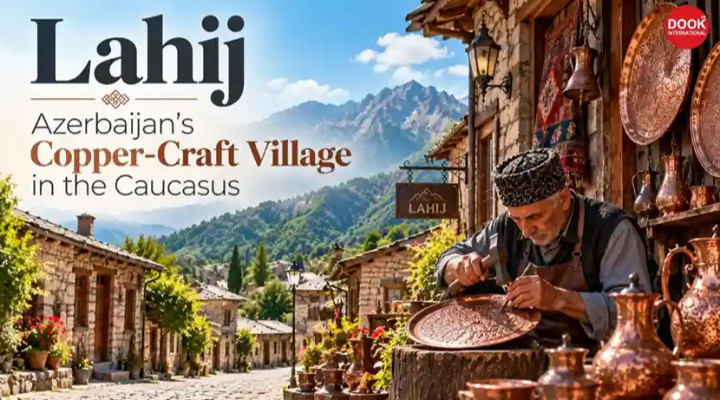
Walk into Lahij, and the first thing you notice is the sound: the steady tap of hammers on copper from small open-fronted workshops lining a cobbled street. Trays, jugs, bowls and tea sets hang in doorways, and the craftsmen working them use tools that have barely changed in generations.
For Indian travellers used to Baku's glass towers, Lahij is the opposite side of Azerbaijan: quiet, old, and built by hand. This guide covers what makes the village special, what to see and buy, and how to plan the trip from Baku.
Lahij at a glance
• Location: Ismayilli district, on the southern slopes of the Greater Caucasus, beside the Girdiman River
• Altitude: about 1,200 to 1,500 metres, depending on the source
• Population: under 1,000 people, who mainly speak Tat, a Persian language, as well as Azerbaijani
• Status: a State Historical and Cultural Reserve since 1980, protecting 103 monuments
• Known for: hand-hammered and engraved copperware, recognised by UNESCO in 2015
Why Lahij is famous: the copper craft
Lahij has been a craft centre for centuries, and historical sources from the 10th and 11th centuries already describe it that way. Copper was always the main trade. In 1923, the village reportedly had more than 200 working copper workshops, and engraved Lahij copperware is held in museums including the Louvre and the Hermitage.
In 2015, UNESCO added the "Copper craftsmanship of Lahij" to its Representative List of the Intangible Cultural Heritage of Humanity. The craft still runs in families. Coppersmiths shape sheets of metal with sledgehammers and chisels, then decorate them with engraved patterns.
Copper was never the only craft. Lahij was also known for leather goods, metal weapons, carpets, woodwork, and wool socks, which you will still see sold on the main street.
What to see in Lahij
• The main bazaar street: known as Boyuk (Great) Street or Bazar Street, this cobbled lane holds most of the copper workshops. Walk it slowly and stop wherever someone is working.
• The old water channels: Lahij has an underground system of channels built from river stones, which some experts date back about a thousand years or more.
• Historic mosques: look for the Badavun Mosque (founded 1791 and restored in 2019), the Zavaro Mosque (1805), the Yukhari Aragit Mosque (1814) and the Agholu Mosque (1902), built from river stones.
• Lil Bridge: the 1931 bridge at the entrance to the village, now used by pedestrians.
• Stone houses: two and three-storey houses of river stone and timber. Rules limit modern building materials to keep the old layout intact.
Source: Lahij State Historical and Cultural Reserve.
Watching a coppersmith at work
Most workshops are open to the street, and many craftsmen are happy for visitors to watch them hammer and engrave. A few simple courtesies help:
• Ask before you photograph or film someone at work.
• Buying a small piece is a good way to thank a craftsman for his time.
• Workshops are busiest in the warmer months. In winter, some may be closed.
What to buy in Lahij, and how to buy it well
The best buys are hand-hammered copper trays, jugs, bowls, tea sets and decorative plates. You will also find wool socks, mountain honey, herbal teas, dried fruit and walnuts.
• Look for hammer marks. Small, uneven dents and hand-cut engraving show handwork. Perfectly smooth, machine-stamped patterns suggest factory pieces.
• Feel the weight. Good hand-beaten copper feels solid, not thin.
• Carry cash. Workshops and stalls usually take only Azerbaijani manat.
• Bargain politely. A friendly counter-offer is normal, especially if you buy several items.
• Pack carefully. Copper is heavy. Check your airline baggage allowance before buying large trays.
Export papers for copperware
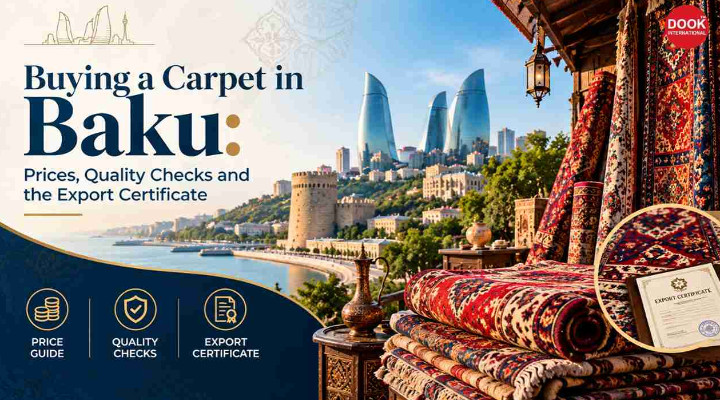
UK government travel advice says you need an export certificate to take antiques or art, including carpets, samovars and copperware, out of Azerbaijan. Your vendor can provide one, or you can get one from the Azerbaijan National Carpet Museum in Baku (GOV.UK). Ask the seller about it and keep your receipt. Our guide to buying a carpet in Baku explains how the certificate works.
Back in India, your purchases count towards the ₹75,000 duty-free allowance under the Baggage Rules 2026.
How to get to Lahij from Baku
Lahij is about 180 km from Baku, roughly 2.5 to 3.5 hours by road depending on the route and stops. The drive runs west through Shamakhi to the Ismayilli area, then climbs a narrower mountain road for the final stretch.
• Two approach roads: local transfer companies describe a scenic southern valley road, best avoided in rain or snow because of landslide risk, and a fully paved northern road that is better in winter.
• Parking: cars are not allowed inside the village. You park at the entrance for a small fee of about 1 manat and walk in.
• Best option: a private car with a driver who knows mountain roads, or a guided day tour.
A day trip from Baku: Shamakhi and Lahij
A full loop from Baku takes about 8 to 10 hours with stops. A typical route looks like this:
• Morning: drive to Shamakhi and visit the Juma Mosque, whose origins go back to the 8th century, and the Yeddi Gumbaz mausoleums of the Shirvanshah rulers. The Diri Baba Mausoleum is a popular photo stop on the way.
• Midday: continue past Ismayilli and up the mountain road to Lahij. Have lunch in the village.
• Afternoon: walk the bazaar street, watch the coppersmiths, and shop.
• Evening: drive back to Baku, or stay overnight in the area and continue northwest.
With an extra day, carry on to the silk-road town of Sheki, with its Khan's Palace and caravanserai. Read our Sheki guide to plan it.
Best time to visit Lahij
• May to October: the most reliable months, with open mountain roads and active workshops.
• September and early October: the grape harvest around Shamakhi adds winery visits to the day.
• Winter: possible, and very quiet, but snow and ice can affect the road, and some workshops close.
Tips for Indian travellers
• Vegetarian options in the village are limited. Carry snacks and ask about vegetable dishes when you order.
• Wear comfortable shoes with a good grip for the cobbles.
• Evenings are cool in the mountains, even in summer, so pack a light jacket.
• Dress modestly if you visit the mosques.
Add Lahij to your Azerbaijan trip
Lahij makes a memorable day out from Baku, and it pairs well with Shamakhi's wineries and mosques. Browse our Baku tours and tell us your dates, and we can suggest how to fit it in.
 Admin


























 Hassle-free booking and best price guaranteed
 24/7 support available
 Hand-picked tours & activities
 Free travel insurance
 sales@dooktravels.com
 +918368513675
