

By Dook International | Updated August 2026 | 15 min read | Sources: Russian Ministry of Foreign Affairs e-Visa portal, GoDigit, HappyFares, BTWVisas — all verified August 2026
Article Summary
Moscow in winter is not a compromise version of a Moscow trip. It is the best version. Red Square under fresh snow, St. Basil's Cathedral against a grey January sky, the Moscow River frozen solid, and a metro system so ornate it is classified as an architectural monument — all at hotel rates 30-40% lower than summer. This guide covers the full 2026 picture for Indian travellers: the Unified e-Visa that processes in 4 days, what a 5-day Moscow trip costs in INR, the apps that actually work in Russia, and how to dress for -20°C without misery.
| Moscow Winter 2026: Fast Facts for Indians |
| Visa for Indians | Unified e-Visa (USD 52 / approx Rs 4,470) OR traditional tourist visa. Russia is NOT yet visa-free for Indians — negotiations ongoing. |
| e-Visa processing time | 4 calendar days (including weekends). No invitation letter, hotel booking, or bank statement required. |
| e-Visa stay permitted | Up to 16 days per trip. Valid for 60 days from issue date. Single entry. |
| Traditional tourist visa | Up to 30 days. Requires invitation letter. Processing: 8-20 working days (regular), 1-3 working days (express). |
| Winter temperature range | -5°C to -20°C (November-March). January and February are the coldest months. December is festive and snowiest. |
| Flight options from India | No direct flights. Common routes: Delhi via Dubai (Emirates), Delhi via Doha (Qatar Airways), Delhi via Istanbul (Turkish Airlines) |
| Currency | Russian Ruble (RUB). 1 RUB = approx Rs 0.90 (August 2026). Carry cash — Indian cards have limited acceptance. |
| Hotel booking platforms | Ostrovok.ru (primary — Booking.com/Expedia don't operate in Russia). Direct hotel websites also work. |
| Taxi app | Yandex Go — the only reliable app-based ride service in Russia. Download before travel. |
| Maps app | Yandex Maps or 2GIS — Google Maps has reduced Russia data. Download offline maps. |
| 5-day Moscow trip cost | Rs 75,000-1,40,000 per person (excluding flights) depending on accommodation standard |
Most Indian travellers who visit Moscow go in summer. This is a mistake — not because summer Moscow is bad, but because winter Moscow is one of the genuinely great urban travel experiences in the world and most people miss it entirely.
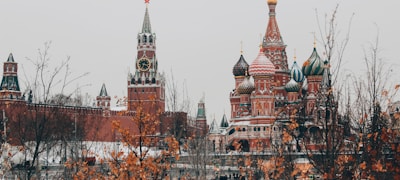
Red Square on a December night is something you cannot fully prepare for. The fairy-lit GUM department store, the illuminated Kremlin towers, St. Basil's Cathedral with its candy-coloured domes frosted with snow — it is the setting that makes Red Square one of the world's most photographed places. In July, it is beautiful. In December, it is extraordinary.
Moscow has changed significantly for Indian travellers since 2022. The Unified e-Visa has simplified entry — 4 calendar days processing, USD 52, no invitation letter required. Western apps and platforms no longer work — Yandex has replaced Google Maps and Uber. Indian cards are unreliable — cash in rubles is essential. These are the practical updates that make or break a Moscow trip for an Indian traveller in 2026, and this guide covers all of them alongside the winter-specific experiences that make Moscow worth the effort.
Russia e-Visa for Indians 2026: The Simplified Route That Most People Don't Know About
Russia is not yet visa-free for Indians — bilateral negotiations are ongoing but as of August 2026, a visa is required for all Indian passport holders. The good news is that the Unified e-Visa introduced in August 2024 has fundamentally changed the process.
The Single Biggest Change: No Invitation Letter Required
Before August 2024, visiting Russia required an invitation letter (turisticheskiy voucher) from a Russian host, hotel, or licensed tour operator — a bureaucratic step that delayed and complicated applications.
The Unified e-Visa eliminated this requirement entirely. Indian travellers can now apply online with just a passport, a photograph, and a credit card. No invitation, no hotel booking, no bank statement.
This is the most significant simplification of Russia's visa process for Indian travellers in decades.
How to Apply for Russia Unified e-Visa from India: Step by Step
| Step 1 | Go to the Official e-Visa Portal Open evisa.kdmid.ru — the official Russian Ministry of Foreign Affairs electronic visa portal. Do not use any third-party website. Multiple sites charge Rs 5,000-15,000 for a service that costs USD 52 (approximately Rs 4,470) directly on the official portal. |
| Step 2 | Fill the Application Form Enter your full name exactly as on your Indian passport, passport number, date of birth, nationality, intended arrival and departure dates, and purpose of visit (Tourism). The form is in English and takes approximately 15-20 minutes to complete accurately. |
| Step 3 | Upload Your Passport Photo Upload a recent digital passport photograph in JPEG format, under 1MB file size, white background, clear face. This is the only document you need to upload. No passport scan, no bank statement, no hotel booking, no invitation letter. |
| Step 4 | Pay USD 52 Online Pay the visa fee online through the government portal. Payment is by international credit or debit card. Given India-Russia banking complexities in 2026, verify that your card accepts international transactions before applying — Visa and Mastercard work but individual bank restrictions vary. Some applicants have had success using a forex card for this payment. |
| Step 5 | Receive e-Visa in 4 Calendar Days Your e-Visa is emailed as a PDF within 4 calendar days — including weekends. Print a colour copy to present at the Russian port of entry. The e-Visa is valid for 60 days from issue date. You must enter Russia within this 60-day window and can stay up to 16 days per trip. |
e-Visa Entry Points: Not All Russian Borders Accept It
The Unified e-Visa is valid only at designated entry checkpoints. For Indian tourists flying to Moscow, the accepted airports are: Sheremetyevo International Airport (SVO) — primary hub, Domodedovo International Airport (DME), and Vnukovo International Airport (VKO). All three serve Moscow. St. Petersburg's Pulkovo Airport (LED) is also e-Visa eligible. Verify your specific entry airport is on the approved list at the e-Visa portal before travel.
e-Visa vs Traditional Tourist Visa: Which Should Indians Choose?
| Unified e-Visa | Traditional Tourist Visa | |
| Cost | USD 52 (approx Rs 4,470) | Rs 7,450-19,000 (varies by processing speed) |
| Stay permitted | Up to 16 days per trip | Up to 30 days |
| Processing time | 4 calendar days | 8-20 working days (regular); 1-3 days (express) |
| Invitation letter needed? | NO — eliminated | YES — from Russian hotel or tour operator |
| Hotel booking needed? | NO | YES |
| Bank statement needed? | NO | YES |
| Application method | 100% online | Russian consulate or VFS Global India |
| Best for | Most Indian tourists visiting Moscow for 1-2 weeks | Longer trips (17-30 days), group tours |
Why Moscow in Winter Is Better Than Moscow in Summer
This is the question Indian travellers most often ask — and the honest answer surprises most of them. Winter Moscow between December and February is, by several measures, the better trip:
• Red Square is transformed: The December-January Christmas market on Red Square — running from late November through early January — is one of the finest European Christmas markets in scale and atmosphere. GUM department store's facade is lit with thousands of lights. The ice rink on Red Square is one of the world's most dramatic skating venues.
• Hotel rates are 30-40% lower: Moscow's tourist season peaks in May-July. December-February sees rates drop significantly while the city's cultural life (Bolshoi Theatre, Tretyakov Gallery, Pushkin Museum) continues at full intensity.
• No queues: The Kremlin, Armoury Chamber, and major museums run at a fraction of summer capacity. Same-day tickets are frequently available.
• The visual experience is unique: Snow transforms Moscow's architecture in a way that photographs cannot fully communicate. The onion domes of St. Basil's Cathedral against a white winter sky is one of the world's great visual experiences.
• The Moscow Metro is best appreciated in winter: When you are escaping -15°C above ground, descending into the marble-panelled, chandelier-lit stations of the Moscow Metro feels like entering another world. In summer, it is a transport system. In winter, it is a sanctuary.
The Honest Trade-off
Winter Moscow is genuinely cold — January averages -10°C to -15°C, with periods of -20°C or lower. If you are not properly dressed, the experience is miserable rather than magical. The cold-weather preparation section of this guide is the most practically important section for Indian travellers, most of whom have never experienced temperatures below -5°C.
What to Do in Moscow in Winter: The Essential Experiences
Red Square and the Kremlin
Red Square is not just a tourist attraction — it is genuinely one of the world's great public spaces. A kilometre of cobblestones flanked by the State Historical Museum to the north, GUM department store to the east, Lenin's Mausoleum and the Kremlin Wall to the west, and St. Basil's Cathedral — possibly the most recognisable building in Russia — to the south. In winter, with snow on the cobblestones and the Cathedral's domes frosted white, it is the definitive Moscow image.
• Entry to Red Square: Free — the square itself requires no ticket. Open 24 hours.
• Kremlin entry: Requires a separate ticket (approximately Rs 1,400 for grounds; Rs 2,800 including Armoury Chamber). Book online at kreml.ru — sold out fast in peak periods.
• Best time: Go at night. The Kremlin towers are illuminated from dusk. The combination of golden towers, snow-covered cobblestones, and GUM's Christmas lights is the most visually dramatic experience Moscow offers.
• GUM: The 19th-century arcade mall on the eastern side of Red Square is worth visiting as an architectural experience regardless of whether you buy anything. The Christmas decorations are extraordinary. The Soviet-era ice cream at GUM Gastronome is a specific tradition — try it even in January.
Moscow Metro — The World's Most Beautiful Underground
The Moscow Metro is not just transport — it is an architectural monument. Built between 1935 and the 1950s, the central stations were designed by leading Soviet architects as 'palaces for the people' — marble floors, bronze chandeliers, mosaics, sculptures, stained glass, and ceiling paintings. The contrast between the brutal winter cold above ground and the extraordinary interiors below is one of Moscow's defining experiences.
• Must-see stations: Komsomolskaya (Ring Line) — the most ornate, with baroque ceiling mosaics. Kievskaya — Ukrainian folk art mosaics. Novoslobodskaya — stained glass panels. Mayakovskaya — Art Deco, winner of the 1939 New York World's Fair Grand Prix. Elektrozavodskaya — portrait medallions of great scientists.
• Troika card: Buy a Troika travel card at any metro station (Rs 90 card fee, load credit). Single metro ride costs approximately Rs 70. Far cheaper and more reliable than taxis for central Moscow movement.
• Metro tour: Consider a guided metro architecture tour — several local guides run English-language tours specifically covering the ornate stations. Book through Airbnb Experiences or Get Your Guide.
Bolshoi Theatre
Attending a ballet or opera at the Bolshoi Theatre is one of the world's great cultural experiences — and winter is the peak season. The Bolshoi's programme runs year-round but December-March has the strongest repertoire, including traditional performances of The Nutcracker and Swan Lake. Tickets range from approximately Rs 1,800 (upper gallery) to Rs 18,000+ (orchestra stalls). Book at bolshoi.ru — requires international payment by card. Book 2-3 weeks in advance for peak dates.
Gorky Park and Muzeon
Gorky Park transforms in winter into one of Moscow's favourite recreational spaces. The riverside park operates a large outdoor ice rink (equipment rental available), and the Muzeon sculpture park adjacent to it is striking under snow — a field of Soviet-era bronze statues, many relocated after the USSR's collapse, standing in a winter landscape that feels deeply cinematic.
Tretyakov Gallery
The State Tretyakov Gallery in Zamoskvorechye holds the world's finest collection of Russian art — from 11th-century icons to 20th-century avant-garde. The main building and the New Tretyakov (on Krymsky Val, near Gorky Park) together cover 1,000 years of Russian visual art. In winter, with short daylight hours, museum days are the natural rhythm of a Moscow trip. Entry: approximately Rs 900.
Kolomenskoye Estate
Kolomenskoye — a UNESCO World Heritage Site on the Moscow River — is the most beautiful winter excursion from central Moscow. The 16th-century Church of the Ascension, the wooden palace of Tsar Alexei Mikhailovich, and the orchard grounds of the royal estate are extraordinary under snow. Free entry to the grounds (small fee for palace interior). Reach by metro: Kolomenskaya station (Orange Line), then a 15-minute walk.
The 2026 Practical Guide: What Has Changed and What Indian Travellers Need to Know
This is the section that makes the difference between a trip that works and one that doesn't. Since 2022, several platforms and services that Indian travellers rely on no longer function in Russia. Here is the honest, updated picture:
Hotel Booking: Not Booking.com
• Ostrovok.ru — Russia's primary hotel booking platform. Full English interface, accepts international cards, most comprehensive inventory for Moscow accommodation. Use this for all hotel bookings.
• Direct hotel websites — Most Moscow hotels (including international chains that remain in Russia) accept direct bookings by email or on their own website.
• Booking.com, Expedia, Hotels.com — These platforms withdrew from Russia. Do not use them for Moscow bookings.
Navigation: Not Google Maps
• Yandex Maps — The primary navigation app in Russia. Download before travel and save offline maps for Moscow. Works with Russian addresses in Cyrillic — the app will translate.
• 2GIS — Alternative offline mapping app. Excellent for Moscow — fully functional without internet connectivity.
• Google Maps — Has significantly reduced Russia data. Unreliable for turn-by-turn navigation in Moscow.
Taxis: Not Uber
• Yandex Go — Russia's equivalent of Uber, operated by Yandex. Download and set up before arriving in Moscow. Accepts cash payment in rubles — important given card limitations.
• Airport transfer: Arrange your Moscow airport pickup in advance — Aeroexpress train from Sheremetyevo to Belorussky Station (45 minutes, approximately Rs 450) is the most reliable option.
Money: Cards Are Unreliable — Carry Cash
• Indian cards have significantly limited acceptance in Russia due to SWIFT restrictions and payment system changes since 2022. Do not rely on your Indian credit or debit card as a primary payment method.
• Carry USD or EUR cash and exchange to Russian Rubles at authorised exchange offices (Обмен валюты) in Moscow. Airport exchange rates are poor — exchange in the city.
• Forex card note: Some Visa/Mastercard forex cards work in Russia; others do not. Verify with your issuing bank before travel. See Dook's best forex cards for Indians guide for the current landscape — and the cash limits abroad guide for RBI rules on how much foreign currency you can legally carry from India.
• ATMs: Russian ATMs (Sberbank, VTB) generally accept cash withdrawals but this is not guaranteed for Indian cards. Do not rely on ATMs as your only cash source.
Communication: VPN and Apps
• WhatsApp, Telegram, Instagram — All function in Russia. Telegram is particularly widely used in Russia for local communication.
• VPN: Some international services may be restricted. A reputable VPN (NordVPN, ExpressVPN) downloaded before travel gives access to blocked content.
• Russian SIM: A Russian SIM card (MTS, Megafon, Beeline) requires a passport for registration and provides reliable local data at low cost. Purchase at any mobile operator shop at the airport or city centre.
How to Dress for Moscow in Winter: The Indian Traveller's Practical Guide
This is the section most Indian travellers skip and most regret skipping. Moscow in January at -15°C is not manageable with a regular winter jacket. The correct layering system means the difference between enjoying the city and spending your trip trying to get warm.
| Layer | What to Wear and Why |
| Base layer (skin) | Thermal base layers — wool or synthetic. Merino wool is the best investment. Cover full body: top, leggings. Buy before leaving India (expensive in Moscow). Uniqlo HEATTECH or Decathlon Isobar are the Indian market benchmarks. |
| Mid layer (insulation) | Fleece jacket or down gilet. Traps body heat between base and outer layer. Down is lighter and warmer per gram; fleece is cheaper and still effective. |
| Outer layer (wind and wet) | A down-filled winter coat rated to at least -20°C. This is the single most important purchase. Rent or buy in Moscow if you do not own one — Decathlon Russia or Sportmaster have good options. A regular Indian 'winter jacket' rated to 0°C is inadequate. |
| Head | Wool or fleece beanie covering ears. Wind chill in Moscow makes exposed ears painful within minutes. Sherpa hats with ear flaps (ushanka) are available at every Moscow market for Rs 500-800. |
| Hands | Waterproof gloves with thermal lining. Bring two pairs — one warm, one waterproof for snow. Glove liners under outer gloves add significant warmth. |
| Feet | Waterproof winter boots with insulation rated to -20°C. Ankle-high boots are insufficient — you will be walking on packed snow and ice. Snow boots with non-slip soles. |
| Face | A neck gaiter or balaclava for very cold days. At -20°C, exposed facial skin becomes genuinely painful after 10 minutes. |
The Most Common Indian Traveller Mistake in Moscow Winter
Wearing a regular 'winter jacket' bought in India for Delhi's 5°C winters and assuming it will work in Moscow's -15°C. It will not. The temperature difference is not a matter of degree — it is a categorical difference in what your body experiences. The minimum requirement for Moscow winter is a down coat rated to -20°C. Everything else is secondary to this single item.
Moscow Winter Trip Cost for Indians: Honest INR Breakdown
| Expense (5 Days) | Budget | Mid-Range | Premium |
| Return flights (India-Moscow) | Rs 35,000-45,000 | Rs 50,000-70,000 | Rs 80,000-1,20,000 |
| Russia e-Visa | Rs 4,470 (fixed) | Rs 4,470 | Rs 4,470 |
| Accommodation (4 nights) | Rs 8,000-14,000 | Rs 22,000-40,000 | Rs 60,000+ |
| Metro + local transport | Rs 1,500-2,500 | Rs 2,500-4,000 | Rs 5,000+ |
| Food (per day) | Rs 800-1,200 | Rs 1,500-2,500 | Rs 4,000+ |
| Attractions + Bolshoi | Rs 5,000-8,000 | Rs 10,000-18,000 | Rs 25,000+ |
| Winter clothing (if buying) | Rs 8,000-15,000 | Rs 0 (if owned) | Rs 0 |
| Total (approx., excl. flights) | Rs 35,000-55,000 | Rs 55,000-90,000 | Rs 1,20,000+ |
For currency planning: the RBI allows Indian travellers to carry up to USD 10,000 in foreign currency per trip. See Dook's complete guide to cash limits abroad for the full rules. For travel insurance, see Dook's travel insurance for international trips — note that Russia coverage should be explicitly confirmed with your insurer, and the travel insurance claims guide covers what to do if you need to make a claim.
5-Day Moscow Winter Itinerary for Indian Travellers
| Day | What to Do |
| Day 1 | Arrive at Sheremetyevo (SVO). Aeroexpress to city centre (45 min). Check in. Metro station architecture walk (Komsomolskaya, Kievskaya, Novoslobodskaya). Evening: Red Square at night — GUM lights, Kremlin towers, ice rink. |
| Day 2 | Morning: Kremlin and Armoury Chamber (pre-booked tickets). Afternoon: St. Basil's Cathedral interior. Evening: Bolshoi Theatre (book in advance) OR GUM food hall dinner. |
| Day 3 | Tretyakov Gallery (full morning). Afternoon: Zamoskvorechye neighbourhood walk — 17th-century merchant quarters, quiet churches, local cafes. Evening: Patriarshy Ponds (if December-January, outdoor skating). |
| Day 4 | Kolomenskoye Estate day trip (Metro: Kolomenskaya). Church of the Ascension under snow. Afternoon: Pushkin Museum of Fine Arts. Evening: Arbat Street (pedestrian arts street). |
| Day 5 | Gorky Park morning (ice rink, Muzeon sculpture park in snow). Afternoon: VDNKh Exhibition Centre (Soviet-era pavilions and monuments, extraordinary in winter light). Evening: Final Red Square visit and departure preparation. |
If combining Moscow with St. Petersburg — Dook's most popular Russia itinerary — the Sapsan high-speed train connects the two cities in 4 hours (approximately Rs 2,800-5,500 per person). See Dook's Saint Petersburg tours for what to add to the itinerary. The layover guide covers airport transit rules for travellers connecting through European hubs en route to Moscow.
Planning a Russia Trip from India?
Dook International has operated Russia tours for Indian travellers since before the e-Visa era. Our russia tour packages include complete visa documentation guidance, hotel bookings through Russia-compatible platforms, pre-arranged Bolshoi Theatre tickets, and airport transfers using verified local operators — so every practical 2026 challenge is handled before you leave India.
 Admin
Admin 





 Hassle-free booking and best price guaranteed
 24/7 support available
 Hand-picked tours & activities
 Free travel insurance
 sales@dooktravels.com
 +918368513675