






Uzbekistan's bazaars have traded crafts for more than a thousand years, and the tradition is very much alive. In Bukhara's trading domes, Samarkand's workshops, and the Fergana Valley's family studios, you can still buy things from the person who made them.
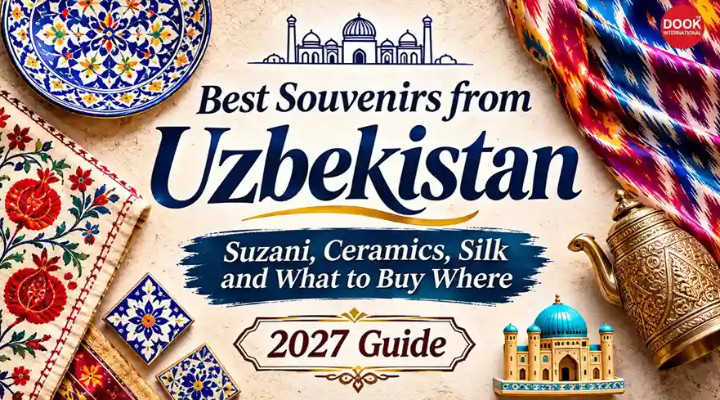
This guide lists the best souvenirs from Uzbekistan, where each one is made, rough prices and how to spot the real thing. It also covers bargaining and customs, so your purchases get home safely.The short answer: The best souvenirs from Uzbekistan are suzani embroidery, Rishtan and Gijduvan ceramics, Margilan ikat silk, handwoven carpets, Samarkand paper, Bukhara gold embroidery and stork scissors, Chust knives, embroidered skullcaps (doppi), Khiva woodcarvings, and spices and dried fruit. Buy crafts where they're made, carry cash in som, keep every receipt, and avoid anything over 50 years old unless it comes with an export certificate.
Best souvenirs from Uzbekistan at a glance
| Souvenir | Best place to buy | Why it's special |
| Suzani embroidery | Bukhara, Samarkand, Urgut, Nurata | Hand-stitched silk or cotton textiles with sun and flower motifs |
| Rishtan ceramics | Rishtan, Fergana Valley | Turquoise and blue ishkor glaze made from plant ash |
| Gijduvan ceramics | Gijduvan, near Bukhara | Earthy brown, yellow and green pottery |
| Ikat silk | Margilan, Fergana Valley | Silk dyed before weaving, with soft-edged patterns |
| Handwoven carpets | Samarkand, Bukhara, Khiva | Wool and silk rugs in Silk Road designs |
| Samarkand paper | Konigil village, near Samarkand | Paper made by hand from mulberry bark |
| Gold embroidery (zardozi) | Bukhara | Gold thread on velvet: caps, bags and panels |
| Stork scissors | Bukhara | Hand-forged scissors shaped like a stork |
| Chust knives (pchak) | Chust, bazaars nationwide | Traditional Uzbek kitchen knives |
| Doppi and chapan | Bazaars nationwide | Embroidered skullcaps and quilted robes |
| Carved wood | Khiva | Book stands carved from a single piece of wood |
| Spices and dried fruit | Chorsu (Tashkent), Siab (Samarkand) | Apricots, raisins, nuts, navat sugar, and plov spices |
12 best souvenirs to buy in Uzbekistan
1. Suzani embroidery
Suzani are large embroidered textiles, traditionally sewn by women as part of a bride's dowry. Each region has its own style: bold red sun motifs in Samarkand and Urgut, finer floral work in Bukhara and Nurata.
Small pieces and cushion covers start at around US$25 (≈ ₹2,200). Large hand-embroidered suzani cost several hundred dollars, more for silk-on-silk work with natural dyes. Turn it over: hand stitching is slightly irregular on the back, while machine embroidery is perfectly even.
2. Rishtan ceramics
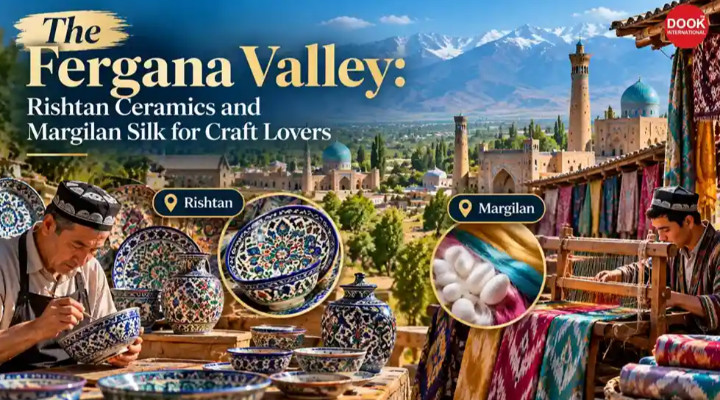
Rishtan, in the Fergana Valley, has made pottery for centuries using local red clay and a turquoise ishkor glaze made from minerals and plant ash. Look for lagan (large platters), kosa (bowls), and piala (tea bowls).
Buying at a family workshop means you pay the maker directly and can watch pieces being thrown and painted. Our guide to the Fergana Valley's Rishtan ceramics and Margilan silk covers the workshops and how to get there.
3. Gijduvan ceramics
Gijduvan, about an hour from Bukhara, produces pottery in warm browns, yellows, and greens, a striking contrast to Rishtan's blues. It is a good alternative if your trip doesn't reach the Fergana Valley.
4. Ikat silk from Margilan
Margilan is Uzbekistan's silk capital. At the Yodgorlik Silk Factory, you can watch cocoons being reeled, threads dyed, and fabric woven on hand looms, then buy scarves, fabric by the metre, or clothing.
Atlas (khan-atlas) is pure silk and the finest option; adras is a sturdier, more affordable silk–cotton mix. Real ikat has slightly blurred pattern edges, because the threads are dyed before weaving. Sharp, perfect lines usually mean printed fabric.
5. Handwoven carpets
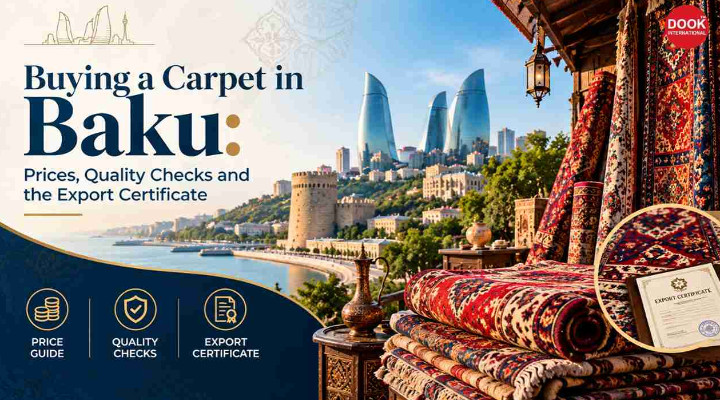
Samarkand, Bukhara and Khiva all have carpet workshops where you can watch weavers at work. Prices in 2026 ran roughly US$200–500 (≈ ₹17,500–44,000) for a small handwoven wool rug and US$1,200–3,500 (≈ ₹1–3 lakh) for a mid-size silk rug of about 1.5 × 2 m.
Check the back: a hand-knotted carpet shows the pattern clearly on the reverse, with small irregularities. Always ask for a receipt and, for anything that looks old, an export certificate (see customs below).
6. Samarkand paper
At Konigil village outside Samarkand, craftspeople make paper by hand from mulberry bark, a technique dating back to the Silk Road era. Notebooks, cards and paper art are light, unbreakable and easy to pack, ideal gifts for colleagues.
7. Bukhara gold embroidery (zardozi)
Bukhara's zardozi masters stitch gold thread onto velvet, a craft once reserved for the emir's court. Embroidered caps, purses, and wall panels are lighter and easier to carry than a full suzani.
8. Stork scissors from Bukhara
Bukhara's blacksmiths forge decorative scissors shaped like a stork, a bird long linked with the city. Watching one being made at a forge is part of the experience. Pack them in checked baggage.
9. Chust knives (pchak)
The Uzbek pchak is a traditional kitchen knife with a curved blade and decorated handle, most famously made in Chust in the Fergana Valley. Every bazaar sells them. Knives must go in checked luggage, never in your cabin bag.
10. Doppi skullcaps and chapan robes
The embroidered doppi skullcap is worn across Uzbekistan, with patterns that vary by region. The quilted chapan robe makes a striking gift. Both are affordable and sold in every bazaar.
11. Khiva woodcarving
Khiva's carvers make folding book stands from a single piece of wood, with no joints or glue. Carved boxes and panels echo the wooden columns of Itchan Kala's mosques.
12. Spices, dried fruit and sweets
Uzbek dried apricots, raisins, almonds and pistachios are excellent value, as are plov spice mixes and navat, a crystallised sugar served with tea. Buy at Chorsu Bazaar in Tashkent or Siab Bazaar in Samarkand, and ask for vacuum packing.
Where to buy souvenirs in Uzbekistan
• Tashkent: Chorsu Bazaar for spices, dried fruit, knives and doppi.
• Samarkand: Siab Bazaar for food; shops in the Registan madrasas for ceramics and suzani; Konigil for paper. The market in Urgut, about an hour away, is known for suzani.
• Bukhara: the historic trading domes and madrasa workshops for suzani, zardozi, carpets and stork scissors.
• Khiva: workshops inside Itchan Kala for carpets and woodcarving.
• Fergana Valley: Rishtan for ceramics and Margilan for silk, both bought directly from the makers.
Tips for buying souvenirs in Uzbekistan
• Bargain in bazaars, not workshops. Haggling is expected at market stalls. Factory shops and family workshops usually have fixed prices.
• Carry cash in som. Small stalls and workshops prefer cash; larger shops in Tashkent and Samarkand may accept cards.
• Compare before you buy. Prices around big monuments like the Registan are higher than in workshops.
• Buy from the maker when you can. It's the best way to be sure an item is handmade, and the money goes to the craftsperson.
Customs rules: taking souvenirs out of Uzbekistan
Modern handicrafts, including new carpets and suzani, can be exported freely. Keep your receipts, as customs officers often check carpets and textiles. Individuals can export goods worth up to US$5,000 without a customs declaration.
Items over 50 years old count as cultural property and generally cannot be exported. If a carpet, suzani or other piece looks old, ask the seller for an expert export certificate before you pay, not at the airport.
On return, your purchases count towards India's duty-free allowance. Our guide to what Indians can bring back duty-free from Central Asia explains the current limit and when to use the red channel.
Packing tips
Carry ceramics in hand luggage, wrapped in bubble wrap and clothing. Put knives and scissors in checked baggage. Roll textiles rather than folding them to avoid creases.
Shop for souvenirs on a Dook Uzbekistan tour
The best shopping in Uzbekistan happens in workshops off the main tourist trail, and a local guide helps you find them and bargain fairly. Many Dook itineraries include Samarkand, Bukhara and Khiva, and some reach the Fergana Valley.
Explore Dook International's Uzbekistan tour packages, or talk to our team about adding craft workshops to your 2027 trip.

 Admin
























 Hassle-free booking and best price guaranteed
 24/7 support available
 Hand-picked tours & activities
 Free travel insurance
 sales@dooktravels.com
 +918368513675
