


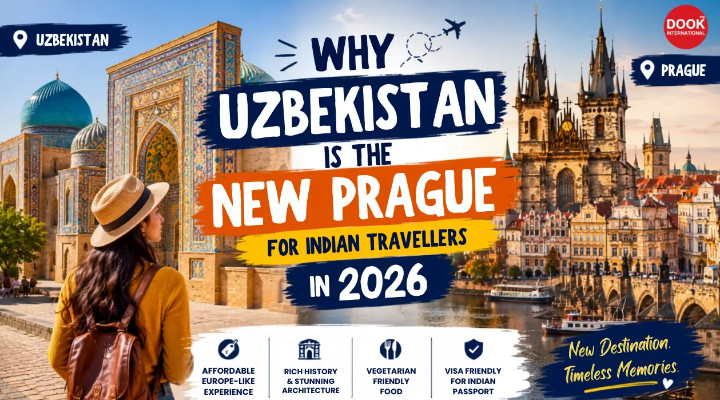
If you have ever stood in front of a photograph of Prague's Old Town Square — the medieval spires, the cobbled lanes, the impossible beauty — and wished you could experience something just like it without fighting through tourist crowds or draining your savings, then Uzbekistan is about to change how you think about international travel.
In 2026, Uzbekistan is the destination that every curious Indian traveller is starting to plan for, and for very good reason. International arrivals have surged by over 35% in the first quarter of 2026 alone, according to UNWTO data. The country is actively targeting 12 million international visitors this year. Travel agencies are reporting new enquiries from cities that never asked about Central Asia before — Pune, Hyderabad, Ahmedabad, Bengaluru.
But here is the bigger story: Uzbekistan does not just match the Prague experience. In several meaningful ways, it surpasses it — and it does so at a fraction of the cost, with far fewer crowds, and with a cultural connection that Indian travellers will feel from the very first hour.
This guide covers everything you need to know before you visit Uzbekistan: the cities, the experiences, the practical details, and why Dook International's Uzbekistan tour packages make this journey seamless from India.
1. Uzbekistan and Prague: Why the Comparison Holds
Prague earned its global reputation through three things: extraordinary preserved medieval architecture, a dense cluster of UNESCO-listed heritage sites in a walkable old town, and a sense of stepping into another century the moment you arrive. For Indian travellers, it has long been the gold standard of heritage city travel in Europe.
Uzbekistan delivers all three — and then raises the stakes.
Consider Registan Square in Samarkand. Three enormous madrasas face each other across a vast plaza, their facades covered in intricate blue-tiled geometric patterns that have been described by historians as among the most beautiful architectural ensembles on earth. Registan is not just comparable to Prague's Old Town Square — it is older, more ornate, and emptier. On a Tuesday morning in September, you might share it with a hundred other visitors. In Prague's Old Town on the same morning, you would share it with ten thousand.
The same logic applies across Uzbekistan's three core heritage cities. Bukhara's medieval old town — a UNESCO World Heritage Site — contains over 140 architectural monuments, from 9th-century mausoleums to 16th-century caravanserais. Khiva's walled inner city, Itchan Kala, feels so perfectly preserved that Uzbek filmmakers routinely use it as an open-air movie set. And Tashkent, the capital, adds a layer of dramatic Soviet-era architecture and metro stations so beautifully decorated they have been called the finest underground art galleries in the world.
Architecture lovers visiting Prague for the first time often say they felt like they had stepped into a painting. Travellers returning from Uzbekistan say they felt like they had stepped into a civilisation.
2. The Four Cities Every Uzbekistan Tour Package Should Cover
Tashkent — The Capital That Surprises You
Most travellers treat Tashkent as a transit point, flying in and heading immediately to Samarkand. This is a mistake. Tashkent is Central Asia's largest city, and it rewards those who stay. The Chorsu Bazaar — a vast covered market inside a domed structure — is one of the most atmospheric markets in Asia, rivalling Istanbul's Grand Bazaar in scale and intensity. The Hazrat Imam Complex houses one of the oldest Qurans in existence, written on deerskin. The Tashkent Metro's ornate stations, each themed differently, are genuinely unmissable.
For Indian travellers, Tashkent also offers a practical base: good flight connections from Delhi and Mumbai, reliable hotels across all budgets, strong mobile connectivity, and an airport that handles international arrivals smoothly.
Samarkand — The Crown Jewel of the Silk Road
If you are planning to visit Uzbekistan for the first time and can only spend time in one city, make it Samarkand. The city sits at the heart of the ancient Silk Road and was once, under Timur in the 14th century, the capital of an empire that stretched from Turkey to India. Registan Square anchors the city's historic centre, but equally powerful is the Shah-i-Zinda necropolis — a street of mausoleums climbing a hill, each covered in extraordinary tilework, where sultans and scholars of medieval Samarkand are buried. The Gur-e-Amir Mausoleum, the tomb of Timur himself, is hauntingly beautiful and directly relevant to Indian history: Timur was the ancestor of the Mughal emperors, and the architectural language he established in Samarkand found its fullest expression in the buildings of Delhi and Agra.
For Indian travellers particularly, Samarkand is not a foreign destination — it is the origin point of a shared heritage. The blue domes of Samarkand and the domes of Humayun's Tomb in Delhi belong to the same architectural conversation.
Bukhara — The Holy City That Has Not Changed in Centuries
Bukhara is older than Samarkand and, if anything, more atmospheric. The old city has been continuously inhabited for over 2,500 years. The Kalon Minaret, built in 1127, is so tall and so perfectly constructed that Genghis Khan — who destroyed nearly everything else in the city — reportedly tilted his head back to look at its top and, awed by it, ordered it to be spared. Walking the narrow lanes between the Ark Fortress, the Poi-Kalyan Complex, and the Lyabi-Hauz pond at sunset is the kind of travel experience that stays with you for the rest of your life.
Bukhara also offers some of the best traditional guesthouses in Uzbekistan. Many are converted caravanserais — the roadside inns where Silk Road merchants rested their camels — and staying in one connects you physically to the trade routes that once linked Uzbekistan to India. Budget two to three nights here at minimum.
Khiva — The Living Museum at the Edge of the Desert
Khiva's walled inner city, Itchan Kala, is a UNESCO World Heritage Site and the most completely preserved medieval Islamic city in Central Asia. Unlike Samarkand or Bukhara, where ancient monuments are embedded within a living modern city, Khiva's old town is essentially unchanged — the same minarets, the same wooden columns, the same palace courtyards that existed four hundred years ago. Climbing the unfinished Kalta Minor Minaret at sunrise, looking out over the desert, is one of the great travel moments available anywhere in the world right now.
3. Why Indian Travellers Connect Instantly with Uzbekistan
The cultural connection between India and Uzbekistan runs deep, and it is one of the reasons Indian travellers to Uzbekistan consistently report feeling unexpectedly at home.
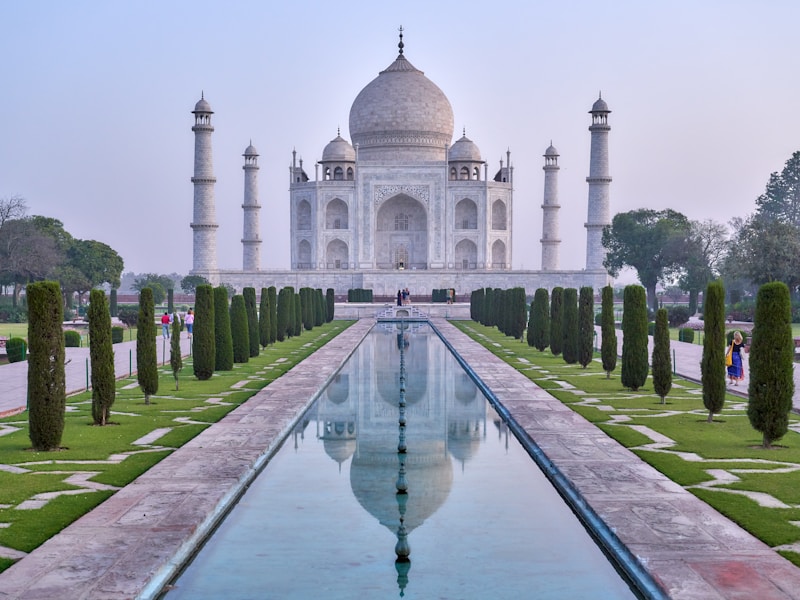
The Mughal Empire — whose architecture defines cities like Delhi, Agra, Lahore, and Fatehpur Sikri — was founded by Babur, who came from Fergana in present-day Uzbekistan. Humayun's Tomb, the Taj Mahal, and Akbar's court style all trace directly to the architectural and artistic traditions of Samarkand and Bukhara. Visiting Uzbekistan is, for any Indian with an interest in Mughal history, a journey to the source.
The cuisine offers another point of connection. Uzbek food is built on spices that Indian cooks use daily — cumin, coriander, and dill are foundation ingredients. The national dish, plov (a slow-cooked rice pilaf with lamb, carrots, and onions), will feel immediately familiar to anyone who has eaten a good biryani. Samsa (flaky meat pastries from clay ovens) echo Indian samosas closely enough to cause genuine nostalgia. Lagman, a hand-pulled noodle soup served across Uzbekistan, is comforting and deeply flavoured. Vegetarian options are available at most restaurants in the main cities, particularly at Indian-friendly establishments that have opened in Tashkent and Samarkand.
The warmth of Uzbek hospitality towards Indian visitors is also frequently noted. Locals are genuinely curious about India, often making the connection to Bollywood and the Mughal heritage themselves. As one Indian traveller wrote in a widely shared travel blog: the spices are the same, the history is shared, and the welcome is real.
4. Uzbekistan Tour Package Budget: What Indian Travellers Actually Spend
One of the most compelling reasons to choose Uzbekistan over comparable European heritage destinations is cost. A week in Prague for two people, including flights from India, accommodation, food, and transport, typically runs to ₹2.5 to ₹3.5 lakh or more. The same week in Uzbekistan, at equivalent comfort levels, comes in significantly lower.
Here is a realistic daily budget breakdown for Indian travellers in 2026, excluding international flights:
• Budget travel (hostels, local food, trains): ₹2,500 to ₹4,000 per person per day
• Mid-range (3-star hotels, restaurants, private transfers): ₹5,000 to ₹8,000 per person per day
• Premium (boutique heritage hotels, private guides): ₹10,000 to ₹18,000 per person per day
For context, staying inside Khiva's Itchan Kala in a converted caravanserai — a once-in-a-lifetime experience — costs approximately ₹2,000 to ₹3,500 per night. A full meal at a traditional chaikhana (tea house) in Bukhara costs ₹400 to ₹700 per person. A ticket on the high-speed Afrosiyob train connecting Tashkent to Samarkand costs roughly ₹700 to ₹1,200 per person.
A well-planned 7-night Uzbekistan tour package from India — covering Tashkent, Samarkand, Bukhara, and Khiva, including flights, hotels, transfers, and sightseeing — typically falls in the range of ₹80,000 to ₹1,40,000 per person depending on the travel class. Dook International offers curated Uzbekistan tour packages across this range, with English-speaking guides and 24/7 on-ground support.
5. Uzbekistan E-Visa for Indians: Everything You Need to Know
Indian citizens require a visa to enter Uzbekistan. The good news is that the process is fully digital, straightforward, and can be completed without visiting an embassy.
E-Visa: The Standard Route for Most Indian Travellers
India is on Uzbekistan's list of e-visa eligible countries. The entire application is completed online through the official Uzbekistan e-visa portal. You will need a scanned copy of your passport's data page, a recent passport-sized photograph in digital format, and your travel dates and accommodation details. The e-visa fee is approximately USD 20 to USD 60, depending on validity (30 days being the standard tourist option), which works out to roughly ₹1,700 to ₹5,000. Processing takes 3 to 5 working days, and the approved visa is sent to your email. Apply at least two weeks before travel to allow buffer time.
Key Visa Points for Indian Travellers
• Uzbekistan is not visa-free for Indian passport holders — unlike neighbouring Kazakhstan, which offers visa-free entry to Indians
• The e-visa allows a single-entry stay of up to 30 days for tourism purposes
• Children under 16 accompanying a visa-holding adult do not require a separate visa
• Transit stays of up to 5 days without a visa are possible for passengers with confirmed onward tickets, provided the airline notifies Uzbek border authorities in advance
• Employment or paid activities are not permitted on a tourist e-visa
When booking a Dook International Uzbekistan tour package, visa guidance and documentation support are included, removing the complexity of self-applying.
6. Best Time to Visit Uzbekistan from India
Uzbekistan's climate is continental, with hot summers and cold winters. Choosing the right time to visit makes a significant difference to the experience.
• Spring — March to May (Recommended): The ideal window for first-time visitors. Temperatures are mild (15–25°C), flowers are in bloom across gardens and bazaars, and the light is perfect for photography. Navruz, the Persian New Year celebrated on 21 March, is one of the most vibrant festivals in Central Asia and a genuinely special time to be in Uzbekistan.
• Autumn — September to November (Also Recommended): The second-best window. Temperatures cool pleasantly after the summer heat, pomegranates and melons are in season, and the golden light of October is spectacular across the old city walls. Crowds are slightly lower than in the spring.
• Summer — June to August: Extremely hot, particularly in Bukhara and Khiva, where temperatures can reach 40–45°C. Manageable for those prepared for heat, and this is the lowest-price season for accommodation and Uzbekistan tour packages. Early mornings and evenings are pleasant.
• Winter — December to February: Cold, particularly in Tashkent (temperatures can drop below zero). Snow occasionally falls on the minarets of Samarkand and Bukhara, creating extraordinary photographic conditions. Budget prices and almost zero tourist presence. Best suited for experienced independent travellers.
7. Getting to Uzbekistan from India: Flights to Tashkent
Tashkent International Airport (TAS) is the main entry point for Indian travellers and is well-connected to major Indian cities.
• Direct flights: Uzbekistan Airways and Air India (codeshare via Uzbekistan Airways) operate direct services on the Delhi–Tashkent and Mumbai–Tashkent routes. Flight time is approximately 3.5 to 4.5 hours.
• Connecting flights: Emirates (via Dubai), Turkish Airlines (via Istanbul), and Flydubai offer frequent connecting options, typically adding 3 to 6 hours to overall journey time.
• Tashkent tour packages: Most Uzbekistan tour packages from India begin in Tashkent, allowing you to acclimatise in the capital before taking the high-speed Afrosiyob train south to Samarkand and Bukhara.
The Afrosiyob train, which connects Tashkent to Samarkand in approximately 2 hours and Samarkand to Bukhara in a further 1.5 hours, is one of the genuine pleasures of travel in Uzbekistan — comfortable, punctual, and scenic.
8. What to See and Do: Experiences Beyond the Monuments
The monuments in Uzbekistan are extraordinary, but the experience of Uzbekistan extends well beyond formal sightseeing.
• Silk weaving in Margilan: The Fergana Valley town of Margilan is the heart of Uzbekistan's silk industry. Watching craftswomen at the Yodgorlik Silk Factory create hand-woven ikat fabric — a process unchanged for centuries — is mesmerising. The fabrics themselves make some of the finest souvenirs available anywhere in Central Asia.
• Ceramics in Rishton: Rishton produces Uzbekistan's most famous blue-glazed pottery, using techniques passed down through generations of master artisans. You can visit workshops, watch pieces being thrown and painted, and buy directly from the makers.
• Paper-making at the Samarkand Paper Museum: Samarkand was one of the first cities outside China to produce paper, and the Samarkand Paper Mill continues to make sheets by hand using mulberry bark. The demonstration is fascinating, and the handmade paper sheets — often printed with Silk Road imagery — are among the most thoughtful gifts you can bring back from Uzbekistan.
• Yurt camping in the Kyzylkum Desert: Between Bukhara and Khiva lies one of the world's great deserts. A night in a traditional yurt camp, with dinner cooked over an open fire and a sky unobstructed by light pollution, is the kind of experience that no European heritage city can offer.
• Aral Sea and Moynaq (for the adventurous): The former Aral Sea port of Moynaq, where Soviet-era fishing boats rust in a desert that was once a sea floor, is one of the most haunting and thought-provoking travel experiences in the world. Uzbekistan is now positioning the Karakalpakstan region, which includes Moynaq, as an ecological tourism destination.
9. Planning to Visit Uzbekistan: Practical Tips for Indian Travellers
• Currency: The Uzbek Som (UZS). As of 2026, roughly 12,500 UZS equals USD 1. ATMs are widely available in cities; carry some cash for bazaars, smaller eateries, and villages. Cards are accepted at hotels, upscale restaurants, and major supermarkets.
• Language: Uzbek and Russian are the main languages. English is growing in tourist areas, but is not universally spoken. Hindi is occasionally understood by Uzbeks with a connection to Bollywood or Mughal history. Google Translate's offline Uzbek and Russian packs are useful to download before arrival.
• Safety: Uzbekistan is considered very safe for tourists. Cities like Tashkent, Samarkand, and Bukhara have low crime rates, tourist-friendly police, well-lit public areas, and an organised approach to visitor management. Solo female travellers are generally comfortable, though modest dress is advisable near religious sites.
• Dress code: Modest clothing is appropriate, particularly at religious sites and in bazaars. Shoulders and knees covered. This aligns with what most Indian travellers would wear naturally when visiting heritage sites.
• Food for vegetarians: Uzbek cuisine is meat-heavy, but vegetarian options are available in most cities, particularly at Indian-friendly restaurants in Tashkent and Samarkand. Samsa (sometimes filled with pumpkin or potato), non (traditional flatbread), and fresh salads are widely available.
• SIM card: Tourist SIM cards are available at Tashkent International Airport from operators including Beeline and Ucell. Mobile internet is very affordable, typically under USD 4 for a generous data pack.
10. A Suggested 7-Night Uzbekistan Itinerary from India
Day 1–2: Tashkent
• Arrive at Tashkent International Airport, hotel check-in
• Chorsu Bazaar, Hazrat Imam Complex, Amir Timur Museum
• Tashkent Metro tour — visit the most architecturally striking stations
• Evening stroll through Tashkent's modern centre
Day 3–4: Samarkand
• Morning Afrosiyob train to Samarkand (approx. 2 hours)
• Registan Square (morning, before crowds), Gur-e-Amir Mausoleum
• Shah-i-Zinda necropolis, Bibi-Khanym Mosque
• Samarkand Paper Museum and local bazaar shopping
Day 5: Bukhara
• Train to Bukhara (approx. 1.5 hours from Samarkand)
• Ark Fortress, Kalon Minaret and Mosque, Poi-Kalyan Complex
• Lyabi-Hauz pond — sunset tea at a chaikhana
Day 6: Bukhara Deeper Exploration
• Ismail Samani Mausoleum (the earliest surviving example of Islamic architecture in Central Asia)
• Trading domes and old bazaar lanes
• Chor Minor (four-minaret tower), optional sunset rooftop dinner
Day 7–8: Khiva
• Drive or fly to Khiva (approx. 5 hours by road or 1 hour by domestic flight)
• Itchan Kala full day — Kalta Minor, Juma Mosque, Tash Hauli Palace
• Sunrise from the city walls; return to Tashkent for departure flight
11. Why Dook International for Your Uzbekistan Tour Package
With over 13 years of expertise in international tour packages and more than 1 million travellers served, Dook International brings the same depth of knowledge to Uzbekistan tour packages that it applies to its broader CIS and Central Asia portfolio.
Dook's Uzbekistan tour packages are designed specifically for Indian travellers, with itineraries that account for Indian dietary preferences (vegetarian and halal meal options, rice-based dishes available), Hindi and English-speaking guide requests, visa documentation support, and group sizes that balance community with intimacy.
Whether you are a first-time international traveller looking for a guided group Uzbekistan tour package, a couple seeking a private, tailored Silk Road journey, or a family wanting to travel with confidence in a destination you do not yet know well, Dook's packages provide the structure that makes the experience possible without removing the sense of discovery that makes it worthwhile.
To enquire about Uzbekistan tour packages from India, contact Dook International at 011-40001000 or sales@dooktravels.com. Customised Tashkent tour packages and multi-city Silk Road itineraries are available on request.Final Thought: Uzbekistan Is Ready. Are You?
Prague will always be beautiful. But in 2026, it will also be expensive, crowded, and deeply familiar to Indian travellers who have seen its photographs a thousand times. Uzbekistan offers something rarer and more valuable: genuine discovery. The feeling of standing in Registan Square at dawn, with almost no one else around, looking up at a facade of tilework more intricate and more ancient than anything in Central Europe, and knowing that most of your friends back home have never even heard of this place.
That feeling — of being a traveller rather than a tourist — is what the best Uzbekistan tour packages from India are designed to deliver.
To start planning your Uzbekistan journey, speak to Dook International's travel specialists at 011-40001000 or write to sales@dooktravels.com. Customised Tashkent tour packages, group Silk Road itineraries, and private departures are available year-round.

 Admin
Admin 






















 Hassle-free booking and best price guaranteed
 24/7 support available
 Hand-picked tours & activities
 Free travel insurance
 sales@dooktravels.com
 +918368513675