


Written by the Dook International Pacific Destination Expert Team — 13 years of crafting New Zealand tour packages for Indian travellers
New Zealand — Where Every Landscape Competes to Be the Most Beautiful
New Zealand occupies a unique position in the imagination of Indian travellers — a destination so consistently described as breathtaking, so frequently listed as the world's most beautiful country, and so deeply embedded in the global consciousness through the Lord of the Rings films that it functions simultaneously as a bucket list dream and an almost mythologically distant destination.
The reality of planning a trip to New Zealand from India in 2026 is more encouraging than most travellers expect. Flights from major Indian cities connect to Auckland in 13–16 hours via Singapore, Kuala Lumpur, or Sydney. The New Zealand Electronic Travel Authority (NZeTA) is a straightforward online application available to Indian passport holders. And the country's extraordinary diversity of landscapes — from subtropical beaches to active volcanoes, from glacier lakes to glowworm caves, from ancient Maori cultural sites to the world's most famous movie set — means that no two days of any New Zealand itinerary are the same.
This guide covers the 26 most beautiful and most rewarding places to visit in New Zealand, organised by island and by experience type, with ideal duration, best time, and traveller recommendations for every destination.
New Zealand at a Glance — North Island vs South Island
| North Island | South Island | |
| Character | Volcanic, cultural, subtropical | Alpine, fjords, glaciers, wilderness |
| Best for | Maori culture, geothermal, Hobbiton, beaches | Mountains, lakes, adventure, scenery |
| Top cities | Auckland, Wellington, Rotorua | Queenstown, Christchurch, Dunedin |
| Best time | Year-round | October to April for accessible roads |
| Ideal duration | 5–7 days | 7–10 days |
North Island — Volcanoes, Culture, and Coastlines
1. Auckland — The City of Sails
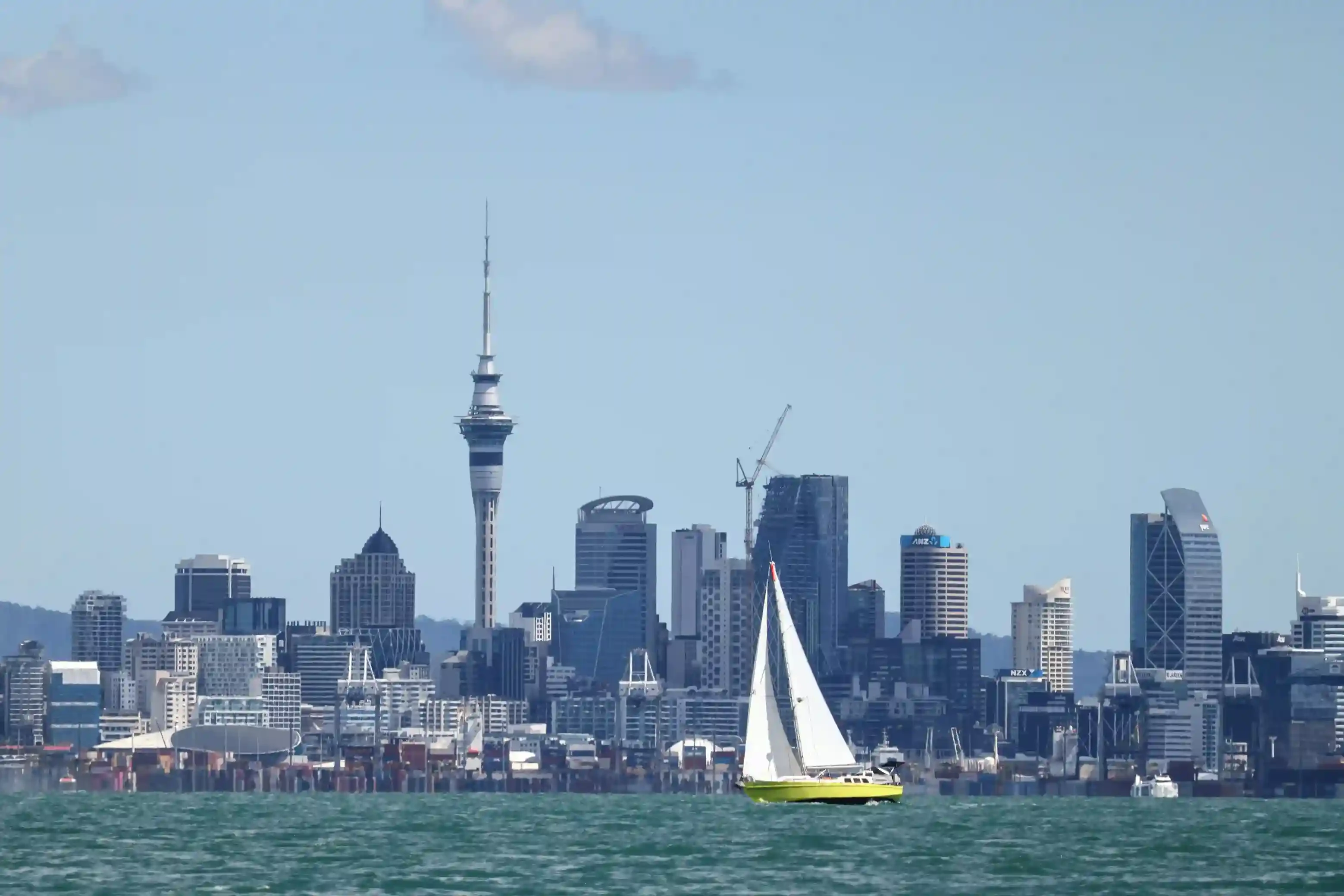
Auckland is New Zealand's largest city and the entry point for most Indian travellers planning a trip to New Zealand — a city built across a volcanic field with 53 extinct volcanoes, set between two harbours, and spread across a landscape that makes it one of the most geographically extraordinary cities in the Pacific.
Sky Tower — Auckland's 328-metre telecommunications tower — offers the finest panoramic view of the city and its two harbours from its revolving restaurant and observation deck, and is the most iconic urban landmark in New Zealand. The Waitematā Harbour and its ferry terminal connect Auckland to the nearby Hauraki Gulf islands.
Waiheke Island — 35 minutes by ferry from downtown Auckland — is one of New Zealand's finest wine regions, with over 30 boutique wineries, olive groves, and beaches on a single compact island. The ferry crossing past the anchored yachts of the Waiheke channel is itself one of Auckland's finest experiences.
Best for: First-time New Zealand visitors | City lovers | Wine enthusiasts
Ideal duration: 2 Nights 3 Days
Best time: Year-round
2. Bay of Islands — Subtropical Paradise
The Bay of Islands is New Zealand's most celebrated coastal destination — a collection of 144 islands, beaches, and harbours in Northland's subtropical north, two hours' drive from Auckland. The bay's warm waters, sailing culture, and extraordinary marine life make it one of the finest coastal destinations in the South Pacific.
Paihia is the main tourist hub — a small waterfront town from which boat tours, dolphin watching cruises, fishing charters, and sea kayaking excursions depart daily. The Hole in the Rock — a natural sea arch on Motukokako (Piercy Island) that boat tours pass through at high tide — is one of the Bay's most photographed natural formations.
Waitangi Treaty Grounds — where the foundational treaty between the British Crown and Maori chiefs was signed in 1840 — is New Zealand's most significant historical site, with an excellent museum and daily Maori cultural performances that provide the finest introduction to New Zealand's indigenous heritage available anywhere in the country.
Best for: Families | Cultural travellers | Marine life enthusiasts
Ideal duration: 2 Nights 3 Days
Best time: November to April
3. Waitomo Glowworm Caves — Underground Magic
The Waitomo Glowworm Caves are one of New Zealand's most extraordinary natural attractions — a series of limestone cave systems carved over millions of years, home to the unique Arachnocampa luminosa glowworm that exists only in New Zealand. The signature experience — a silent boat ride through the Glowworm Grotto, guided by an audio track, as thousands of bioluminescent glowworm larvae illuminate the cave ceiling in a recreation of the night sky — is one of the most genuinely magical natural experiences available anywhere in the Pacific.
The caves have been guided since 1889, and some of the current guides are direct descendants of the Maori chief who originally explored the cave system — a continuity of place and culture that gives the Waitomo experience a depth beyond standard cave tourism.
Best for: All family types | Children aged 4 and above | Nature enthusiasts
Entry: Approximately NZD 55 for adults
Ideal duration: Half-day (combine with Rotorua drive)
Best time: Year-round
4. Rotorua — Geothermal Wonders and Maori Culture
Rotorua is New Zealand's most culturally and geologically dramatic city — a place where the earth is visibly, audibly, and olfactorily alive. Built on one of the world's most active geothermal zones, Rotorua's streets are threaded with steam vents, the air carries a permanent sulphurous note, and the surrounding landscape erupts with boiling mud pools, silica terraces, and geysers that shoot 30 metres into the sky.
Te Puia in the Te Whakarewarewa Geothermal Valley is the finest integrated geothermal and Maori cultural experience in New Zealand — 70 hectares of geothermal activity, including the world-famous Pohutu Geyser (which erupts up to 20 times per day to a height of 30 metres), combined with the New Zealand Maori Arts and Crafts Institute, where traditional wood carving, weaving, and stone carving are taught and demonstrated.
Wai-O-Tapu Geothermal Wonderland, 30 km south of Rotorua, is New Zealand's most colourful geothermal site — the Champagne Pool (a 65-metre-wide boiling crater lake of brilliant emerald water fringed with orange silica deposits), the Artist's Palette (a landscape of vivid mineral colours), and the Lady Knox Geyser (which performs daily at 10:15 AM) create one of New Zealand's most extraordinary visual landscapes.
Tamaki Maori Village — an evening Maori cultural experience that combines the traditional powhiri (welcome ceremony), a hangi feast (food cooked in an earth oven), and cultural performances including the haka — is one of the finest introductions to living Maori culture available to visitors in New Zealand.
Best for: All traveller types | Cultural enthusiasts | Families
Ideal duration: 2 Nights 3 Days
Best time: Year-round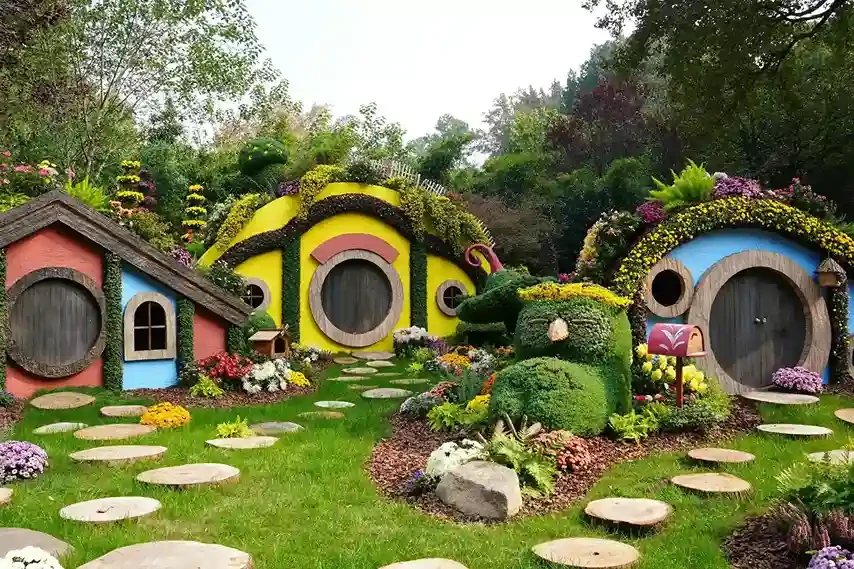
5. Hobbiton Movie Set, Matamata — Step Into the Shire
Hobbiton is New Zealand's most uniquely joyful attraction — and one of the most genuinely delightful places to visit on the North Island, regardless of whether you are a Lord of the Rings fan.
Located on a 1,250-acre sheep farm in the Waikato hills near Matamata, the Hobbiton Movie Set is the permanent recreation of The Shire from Peter Jackson's Lord of the Rings and The Hobbit trilogies — 44 Hobbit Holes built into the hillside, each with its own individual garden, washing line, and lovingly crafted detail, set in rolling green hills under a sky that consistently looks like it was painted. The Green Dragon Inn at the set's centre serves ales, ginger beers, and food at its thatched bar.
Guided tours run throughout the day and take approximately 2 hours. For Indian families with children, the combination of the fantasy film set environment, the scenic farmland setting, and the accessible Green Dragon Inn makes Hobbiton one of the most enjoyable and least physically demanding experiences in New Zealand.
Best for: All family types | Film enthusiasts | Children aged 5 and above
Entry: Approximately NZD 49 for adults | Advance booking essential
Ideal duration: Half-day (combine with Waitomo or Rotorua drive)
Best time: Year-round
6. Lake Taupō — The Volcanic Heart of the North Island
Lake Taupō — New Zealand's largest lake, created by a catastrophic volcanic eruption approximately 1,800 years ago — sits at the geographic centre of the North Island, surrounded by geothermal activity, Tongariro National Park, and the Waikato River. The lake's 616 square kilometres of clear water, its backdrop of the Tongariro volcanoes to the south, and its accessibility from Rotorua make it one of the finest central North Island destinations for Indian families planning a New Zealand trip.
The Taupo Boat Harbour is the departure point for boat trips to the Mine Bay Maori Rock Carvings — a series of massive Maori facial carvings carved directly into the lake's rock face in the 1970s and accessible only by water, creating one of New Zealand's most atmospheric and most visited Maori cultural sites.
Huka Falls — 3 km north of Taupo town — is New Zealand's most visited waterfall: a point where the entire Waikato River is forced through an 8-metre-wide canyon before dropping 11 metres into a turquoise pool in a concentrated torrent of extraordinary force and volume. Free to visit and accessible by a 10-minute walkway.
Best for: All traveller types | Families | Geological enthusiasts
Ideal duration: 1 Night 2 Days
Best time: October to May
7. Tongariro National Park — UNESCO Dual Heritage and the Alpine Crossing
Tongariro National Park is New Zealand's oldest national park and one of only a handful of UNESCO World Heritage Sites with both natural and cultural significance. The park's three active volcanic peaks — Ruapehu (2,797m), Tongariro (1,967m), and Ngauruhoe (2,291m, which served as Mount Doom in the Lord of the Rings films) — rise from the centre of the North Island in one of the most dramatic volcanic landscapes in the Southern Hemisphere.
The Tongariro Alpine Crossing — a 19.4 km one-way day hike across the volcanic plateau, through the South Crater, past the Emerald Lakes (three vivid green crater lakes), and down to the Ketetahi car park — is consistently rated as one of the world's finest single-day walks. The crossing takes 6–8 hours and is accessible to reasonably fit walkers without specialist mountaineering skills.
In winter, Whakapapa Ski Field on Mount Ruapehu's northern slopes is New Zealand's largest ski area — a world-class skiing destination that is particularly accessible for Indian families planning a winter trip to New Zealand.
Best for: Experienced hikers | Adventure travellers | Winter sports families
Ideal duration: 1 Night 2 Days (for the Alpine Crossing)
Best time: November to April for the Alpine Crossing | June to September for skiing
8. Wellington — New Zealand's Cool Capital
Wellington is New Zealand's capital city and its cultural heart — a compact, walkable, harbour-side city that consistently punches above its weight in museums, café culture, culinary excellence, and creative energy. Often cited as one of the world's most liveable cities, Wellington rewards the traveller who allows a full day to explore beyond its compact CBD.
Te Papa Tongarewa — the Museum of New Zealand — is one of the finest national museums in the Pacific, housing the world's most comprehensive collection of Maori taonga (treasures), Pacific art, and New Zealand natural history across six floors of outstanding exhibition design. Entry is free for the permanent collection.
The Wellington Cable Car from Lambton Quay to the Botanic Garden and Kelburn Village is one of Wellington's great short journeys, giving exceptional views over the harbour from its hilltop terminus. The Wellington Botanic Garden at the top covers 26 hectares of native bush, formal gardens, and the New Zealand Astronomical Centre.
Weta Workshop — the special effects studio founded by Lord of the Rings director Peter Jackson — offers guided studio tours that take visitors behind the scenes of some of cinema's most extraordinary practical effects work. This is one of Wellington's most popular tourist experiences, and advance booking is essential.
Best for: Cultural travellers | Museum enthusiasts | Film fans | Foodies
Ideal duration: 1 Night 2 Days
Best time: Year-round
South Island — New Zealand's Most Spectacular Scenery
9. Marlborough Sounds and Nelson — The Sunlit North
The Marlborough Sounds — a complex network of sea inlets, bays, and peninsulas at the top of the South Island — are among New Zealand's most beautiful and most under-visited coastal landscapes. The Sounds are accessible by ferry from Wellington (a 3-hour crossing through scenery that is itself one of New Zealand's great sea journeys) or by small plane from Wellington or Christchurch.
Picton is the Sounds' main town and ferry terminal — a small, beautifully situated harbour town from which water taxis, kayaking tours, and Queen Charlotte Track walks depart. The Queen Charlotte Track — a 73 km multi-day walk along the ridges above Queen Charlotte Sound — is one of New Zealand's Great Walks and offers exceptional views of the Sounds' sheltered blue waters and forested hills from every point of the route.
Nelson — New Zealand's sunniest city, 1 hour west of Blenheim — is the geographic centre of New Zealand and the gateway to the golden beaches of Abel Tasman National Park, which are covered separately below.
Best for: Nature walkers | Coastal lovers | Couples and honeymooners
Ideal duration: 2 Nights 3 Days
Best time: November to April
10. Abel Tasman National Park — Golden Beaches and Coastal Perfection
Abel Tasman is New Zealand's smallest but most visited national park — a 23,000-hectare coastal wilderness of golden granite sand beaches, crystal clear turquoise water, granite headlands covered in native bush, and extraordinary wildlife including New Zealand fur seals, bottlenose dolphins, and Little Blue Penguins.
The Abel Tasman Coast Track — one of New Zealand's nine Great Walks — is a 60-km multi-day coastal walk of exceptional beauty, passing through a sequence of beaches and coves that are accessible only by foot or water taxi. For Indian travelers who want the Abel Tasman experience without the multi-day commitment, water taxi day trips to the park's most beautiful beaches — including Bark Bay, Onetahuti, and Tonga Island — provide a perfect introduction.
Sea kayaking through the park's sheltered coastal waters — guided or self-guided — is one of New Zealand's finest active outdoor experiences and is suitable for beginners with a half-day instruction session.
Best for: Nature lovers | Active travellers | Couples | Families with older children
Ideal duration: 2–3 Nights
Best time: October to April
11. Kaikōura — Whale Watching Capital of the Pacific
Kaikōura — a small coastal town 2.5 hours north of Christchurch on one of New Zealand's most scenic coastal drives — is the world's finest whale watching destination accessible year-round, where the unique geography of a submarine canyon directly offshore creates conditions for an extraordinary concentration of sperm whales that remains in residence every month of the year.
Whale watching boat tours (and increasingly, whale watching air tours for families who prefer not to go by sea) depart daily and have an extraordinary encounter success rate. Beyond the sperm whales that are the primary draw, Kaikōura's waters host dusky dolphins (tours include swimming with dolphins), New Zealand fur seals, Hector's dolphins, and a rich seabird colony including albatross and shearwaters.
The Kaikōura Peninsula Walkway — a 2-hour circular coastal walk along the peninsula's sea cliffs and coast — passes directly through a New Zealand fur seal colony where seals nap, play, and occasionally heave themselves across the walking track in one of the most genuinely intimate wildlife encounters available to travellers without expedition equipment.
Best for: Wildlife enthusiasts | Marine life lovers | All family types
Ideal duration: 1 Night 2 Days
Best time: Year-round
12. Christchurch — The Garden City Reborn
Christchurch — New Zealand's South Island gateway and the country's second-largest city — has undergone one of the world's most remarkable urban transformations since the devastating 2011 earthquake. The rebuilt city centre is a showcase of innovative architecture, pop-up culture, and the most extraordinary botanic garden in New Zealand.
The Christchurch Botanic Gardens — 21 hectares of formal gardens, native bush, and specialist plant collections in the heart of the city — attract over 1.1 million visitors annually and are considered the finest botanical collection in New Zealand. The Gondola Cable Car to Port Hills above the city gives panoramic views of Christchurch, the Canterbury Plains, and the Southern Alps that are among the finest city viewpoints in the South Island.
Canterbury Museum — relocated to a temporary home during ongoing earthquake strengthening of the original 1870 building — houses excellent collections of Antarctic exploration history, Maori taonga, and Canterbury regional heritage that are free to access.
Best for: Cultural travellers | Garden enthusiasts | City lovers
Ideal duration: 1 Night 2 Days
Best time: October to April
13. Lake Tekapo — Turquoise Lake and Dark Sky Reserve
Lake Tekapo is the most photographed lake in New Zealand and one of the most photographed natural landmarks in the Southern Hemisphere — a turquoise alpine lake fed by the glacial melt of the Southern Alps, set against a backdrop of snow-capped peaks, tussock grassland, and the brilliant blue of the New Zealand high-country sky.
The Church of the Good Shepherd — a small stone chapel built in 1935 on the lakeshore with a window behind the altar that frames the lake and mountains — is one of New Zealand's most iconic and most visited small buildings, and the most photographed single structure in the South Island. The combination of the church, the bronze Mackenzie sheep dog statue beside it, and the turquoise lake behind creates a composition of extraordinary photographic power.
Lake Tekapo is located within the Aoraki Mackenzie International Dark Sky Reserve — the world's largest Dark Sky Reserve covering 4,322 square kilometres of the Mackenzie Basin — where the absence of light pollution creates night sky conditions of extraordinary clarity. Dark Sky Tours (operated by Earth & Sky on Mount John above the lake) offer telescope-guided stargazing experiences that are among the finest available to non-specialist visitors anywhere in the Southern Hemisphere.
Best for: Photography enthusiasts | Stargazers | Couples and honeymooners | Nature lovers
Ideal duration: 1 Night 2 Days
Best time: Year-round | June to August for the clearest winter night skies
14. Aoraki Mount Cook National Park — New Zealand's Highest Peak
Aoraki/Mount Cook National Park — a UNESCO World Heritage Site — is home to New Zealand's highest mountain at 3,724 metres and one of the most visually extraordinary alpine landscapes in the Southern Hemisphere. The park's name means "Cloud Piercer" in Maori — and on a clear day, the mountain's ice-capped summit above Lake Pukaki's turquoise water creates the most iconic view in all of New Zealand.
Lake Pukaki — the brilliant turquoise lake at the park's entrance, fed directly by the Hooker and Mueller glaciers — is frequently cited as the most beautiful lake in New Zealand. The 55-km road from Lake Tekapo to Mount Cook village along the western shore of Lake Pukaki, with the mountain growing larger at every turn, is one of the world's great scenic drives.
The Hooker Valley Track — a 10-km return walk from Mount Cook village through three swing bridges across glacier-fed streams to the Hooker Lake terminal glacier — is one of New Zealand's finest accessible mountain walks. Note: the track was partially closed from April 2025 due to construction — the full track is expected to reopen by autumn 2026.
Scenic helicopter flights over the Mount Cook glaciers and the Southern Alps — landing on the Tasman Glacier for a champagne glacier walk — are available from Mount Cook village and are consistently rated as one of the finest scenic flight experiences available anywhere in the world.
Best for: Nature and mountain lovers | Hikers | Photographers | All traveller types
Ideal duration: 1 Night 2 Days
Best time: November to March for hiking | Year-round for scenic flights
15. Queenstown — Adventure Capital of the World
Queenstown is the undisputed adventure capital of New Zealand and one of the most energetic and visually spectacular resort towns on earth — a lakeside city set on the shores of Lake Wakatipu, surrounded on all sides by the jagged peaks of the Remarkables mountain range and the Ben Lomond massif.
The world's first commercial bungee jump was launched from Queenstown's Kawarau Bridge in 1988, and the city has built an entire industry around adventure since: skydiving, jet boating through the Shotover Canyon, white water rafting, paragliding, mountain biking, skiing on Coronet Peak and The Remarkables — Queenstown has pioneered or perfected more adrenaline experiences than any other single destination in the Pacific.
For Indian families planning a trip to New Zealand who want adventure without full commitment, the Skyline Gondola to Bob's Peak above Queenstown — with its luge rides, mountain biking, and the finest panoramic view of Lake Wakatipu and the Remarkables available to any Queenstown visitor — provides a perfect family-accessible adventure experience.
Glenorchy — 45 minutes by road along Lake Wakatipu from Queenstown — is one of New Zealand's most beautiful small villages and a filming location for the Lord of the Rings. The drive along the lake is widely considered one of the finest short scenic drives in the South Island.
Best for: Adventure travellers | Families with older children | Couples | Ski enthusiasts
Ideal duration: 3 Nights 4 Days
Best time: November to April for adventure | June to September for skiing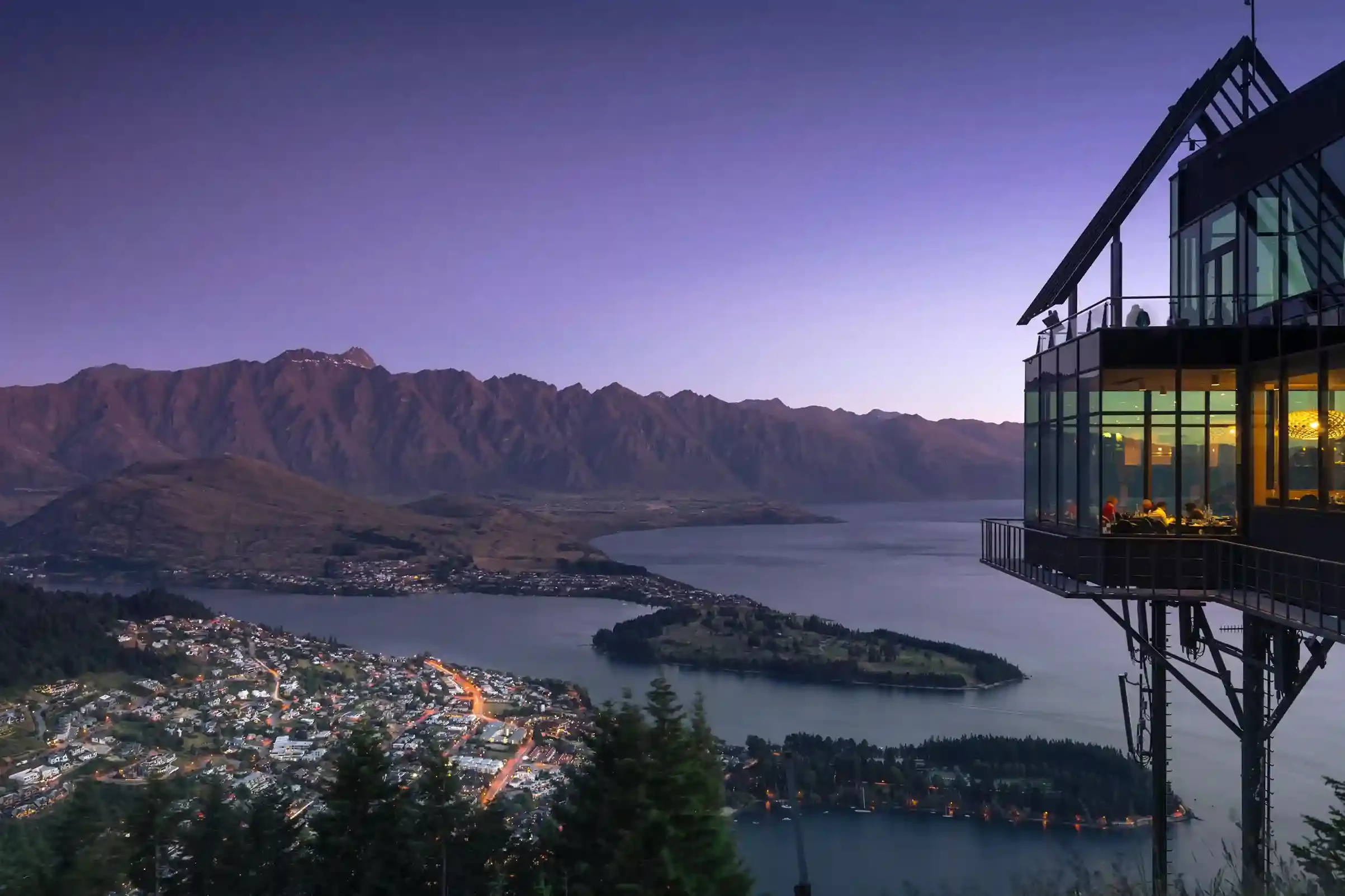
16. Wanaka — Queenstown's Quieter and More Beautiful Neighbour
Wanaka — 1 hour from Queenstown over the Crown Range highway — is the South Island's finest discovery for Indian travellers who have been told about Queenstown and arrive in Wanaka to find something unexpectedly more beautiful and significantly more peaceful.
Lake Wanaka is widely considered the most aesthetically perfect lake in New Zealand — a large, calm body of brilliantly clear water surrounded by mountains, with the famous solitary willow tree (That Wanaka Tree) growing from the lake's edge just metres from the shore, creating what has become New Zealand's most reproduced single photograph.
Roy's Peak — a 16-km return hike to a 1,578-metre summit above Wanaka with 360-degree views of Lake Wanaka, Lake Hawea, and the Southern Alps — is considered one of the finest day hikes in the South Island and one of the most rewarding moderate-effort walks in New Zealand.
Wanaka is also the craft beer capital of New Zealand — with more breweries per capita than any other New Zealand town, a fact that adds a notable dining and bar culture dimension to the natural beauty.
Best for: Couples | Nature walkers | Photographers | Travellers seeking a quieter alternative to Queenstown
Ideal duration: 1 Night 2 Days
Best time: November to April
17. Fiordland National Park and Milford Sound
Fiordland National Park is the largest national park in New Zealand — 1.26 million hectares of ancient fjords, rainforest, glaciers, and mountains in the south-western corner of the South Island, a UNESCO World Heritage Site and one of the world's last great wilderness areas. Within it sit New Zealand's two most visited natural wonders.
Milford Sound — the most visited destination in New Zealand after Auckland — is a 15-km long fjord of extraordinary drama: near-vertical granite walls rising 1,200 metres from the water's surface, Stirling Falls and Lady Bowen Falls plunging directly into the fjord, fur seals basking on the rocks, dolphins surfing the bow waves of passing cruise boats, and the Mitre Peak (the world's highest sea-cliffed mountain, rising 1,692 metres directly from the fjord) as the signature image of New Zealand.
Boat cruises of Milford Sound are the primary experience — ranging from 2-hour morning cruises to overnight cruises that allow the fjord to be experienced after the day-trippers have left and the sounds return to their natural state of wild silence.
Doubtful Sound — three times longer and ten times larger than Milford but accessible only via a combination of boat across Lake Manapouri and a bus over the Wilmot Pass — is for travellers who want the Milford Sound experience without the crowds. The local Maori legend says that Hinenui-te-Po, the goddess of death, released sandflies into Milford Sound to drive people away because the landscape was so beautiful they would never leave. The plan failed.
Best for: All traveller types — this is the single most unmissable destination in New Zealand
Ideal duration: Full day cruise | Overnight cruise for the complete experience
Best time: October to April for clearest weather | Winter for dramatic waterfalls after rainfall
18. Dunedin and the Otago Peninsula — Wildlife and Victorian Heritage
Dunedin is New Zealand's southernmost city and its most architecturally distinctive — a Victorian Scottish heritage city of grand stone buildings, a remarkably steep main street, and the finest café culture in the South Island outside Queenstown. The Dunedin Railway Station — built in 1906 in Flemish Renaissance style with its distinctive black and white checkered mosaic floor — is the most photographed building in New Zealand after Hobbiton and the Church of the Good Shepherd.
The Otago Peninsula — 25 km east of Dunedin — is one of the world's finest accessible wildlife destinations: home to the world's only mainland breeding colony of Northern Royal Albatross at Taiaroa Head (the only place on earth where these enormous birds with 3-metre wingspans can be observed from a visitor centre), the endemic and endangered Yellow-eyed Penguin (the world's rarest penguin, returning to beach nesting sites every evening), and the New Zealand fur seal and sea lion colonies on the peninsula's rocky shores.
Best for: Wildlife enthusiasts | Heritage travellers | Photography enthusiasts
Ideal duration: 2 Nights 3 Days
Best time: September to February for the wildlife breeding season
19. Te Anau and the Kepler Track — Gateway to Fiordland
Te Anau — the small lakeside town that serves as Fiordland National Park's gateway — is one of the most beautifully situated small towns in New Zealand, set on the shores of Lake Te Anau (New Zealand's largest South Island lake) with the mountains and rainforests of Fiordland behind it.
The Te Anau Glowworm Caves — accessible by boat across the lake and only on guided tours — are one of New Zealand's finest and least-crowded glowworm experiences, with smaller groups than Waitomo and an underground river setting of exceptional atmospheric beauty.
The Kepler Track — one of New Zealand's nine Great Walks, starting and ending at Te Anau — is a 60-km, 3–4 day alpine circuit that is widely considered the most scenically complete of all the Great Walks, crossing beech forest, open alpine terrain, and the shore of Lake Manapouri in a single continuous circuit of extraordinary variety.
Best for: Walkers and trekkers | Nature enthusiasts | Fiordland day trip travellers.
Ideal duration: 1 Night 2 Days (as a base for Milford and Doubtful Sound excursions)
Best time: October to April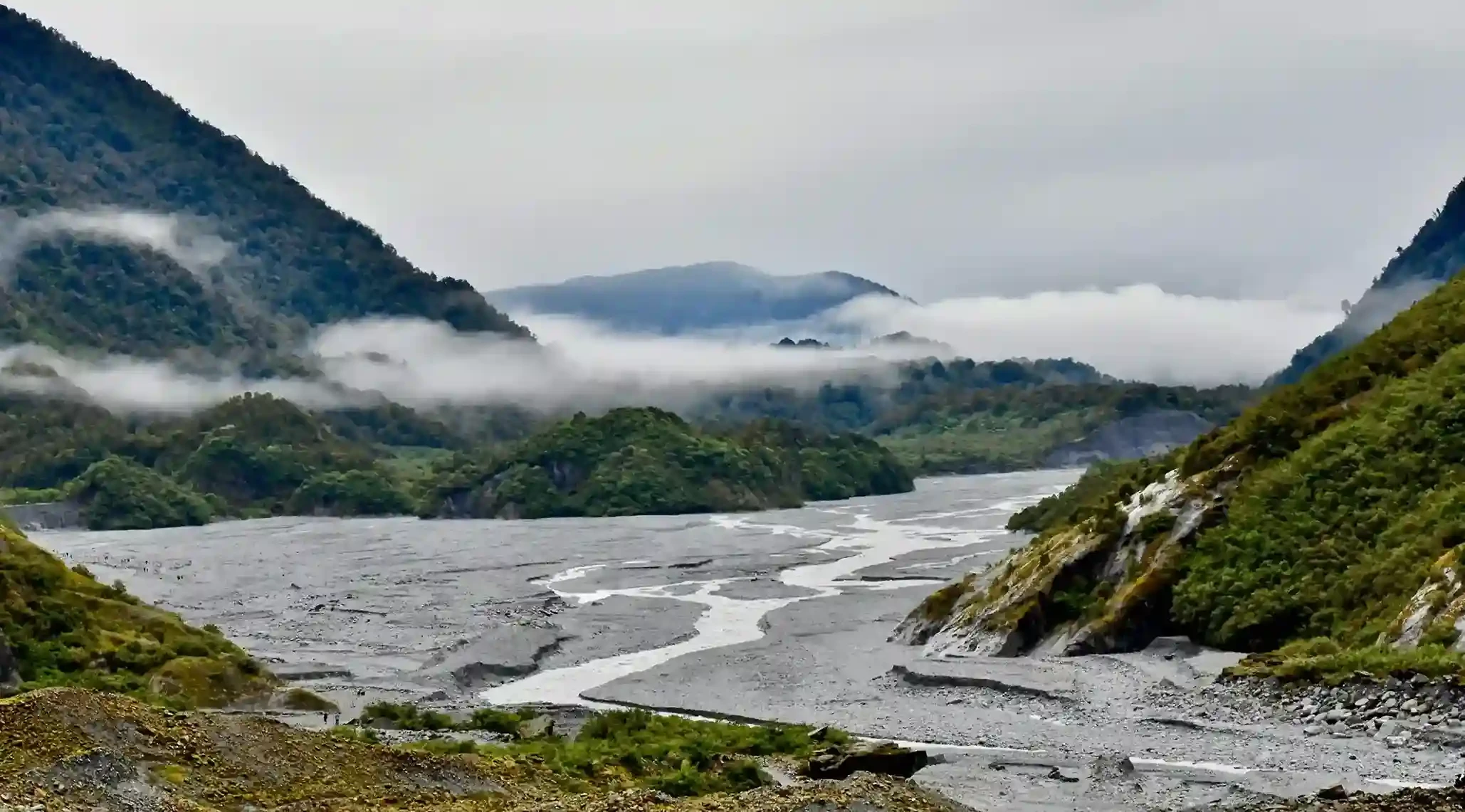
20. Franz Josef and Fox Glacier — The West Coast Ice Rivers
Franz Josef Glacier and the adjacent Fox Glacier are two of the world's most accessible glaciers — rivers of ancient ice descending from the Southern Alps to within 300 metres of temperate rainforest, creating one of the most extraordinary juxtapositions of ice and vegetation in any landscape in the southern hemisphere.
Heli-hiking — landing by helicopter on the glacier's upper snowfields and walking with crampons on the ice under guide supervision — is the most popular Franz Josef Glacier experience and one of the most frequently cited once-in-a-lifetime activities available to Indian travelers visiting New Zealand. The helicopter approach over the forest, up the river valley, and onto the blue-white ice is itself extraordinary before the walking has begun.
Lake Matheson — a short walk from the Fox Glacier visitor centre — is a small, perfectly still lake surrounded by native kahikatea forest whose glassy surface reflects the snow-capped peaks of Mount Cook and Mount Tasman in what is known as the "mirror lake view" — one of New Zealand's most iconic natural reflections and one of the finest single photographs available to any traveler visiting the South Island.
Best for: Adventure travellers | Photographers | All traveller types with reasonable fitness
Ideal duration: 1 Night 2 Days
Best time: October to April (most helicopter tours operate year-round, weather permitting)
Places 21–26 — Essential New Zealand Experiences
21. Coromandel Peninsula — Cathedral Cove and Hot Water Beach
The Coromandel Peninsula — 2 hours east of Auckland — is one of the North Island's finest and most accessible coastal destinations. Cathedral Cove is a natural marine reserve and one of New Zealand's most photographed coastal formations — a dramatic natural arch connecting two white-sand beaches, accessible by kayak or water taxi from Hahei Beach. The arch featured prominently in the Narnia films and is one of New Zealand's most recognisable natural structures.
Hot Water Beach — 15 minutes from Hahei — is one of New Zealand's most unique experiences: a beach where geothermal water percolates up through the sand in a defined zone at low tide, allowing visitors to dig their own personal thermal spa pool in the beach sand with hired spades. The experience lasts 2 hours either side of low tide and is one of the most joyfully eccentric natural phenomena available to travellers on the North Island.
Best for: Families | Beach lovers | Nature enthusiasts
Ideal duration: 1 Night 2 Days
Best time: November to April
22. Napier — Art Deco Capital of the Pacific
Napier is one of the world's finest Art Deco cities — rebuilt almost entirely in the Art Deco style following a devastating 1931 earthquake, creating a remarkably consistent and beautifully maintained architectural heritage of the 1930s that is recognised as the world's most complete urban example of the style. The Napier Art Deco Weekend, held every February, is one of New Zealand's most celebrated annual festivals.
Napier is also the gateway to Hawke's Bay — New Zealand's oldest wine region, with over 40 wineries producing the country's finest Chardonnay and Syrah. The Cape Kidnappers Gannet Colony — a colony of over 20,000 Australasian gannets nesting on dramatic coastal cliffs — is one of the most extraordinary accessible wildlife experiences on the North Island.
Best for: Architecture enthusiasts | Wine lovers | Wildlife observers
Ideal duration: 1 Night 2 Days
Best time: November to April
23. Northland — Cape Reinga and the Ninety Mile Beach
At the northernmost tip of New Zealand, Cape Reinga is one of the country's most sacred and most dramatically situated landmarks — the point where the Tasman Sea and the Pacific Ocean collide in a visible clash of currents, watched over by an ancient pohutukawa tree believed in Maori tradition to be the departure point of spirits beginning their journey to the afterlife. The lighthouse at Cape Reinga — accessible by the famous Ninety Mile Beach 4WD tour — is one of New Zealand's most recognisable landmarks.
Ninety Mile Beach (which is actually 88 km long — officially renamed but colloquially still called Ninety Mile) is one of the Southern Hemisphere's longest beaches and is navigable by 4WD vehicles in both directions, with the dunes at Te Paki at its northern end offering one of New Zealand's finest sandboarding experiences.
Best for: Adventure travellers | Road trippers | Cultural travellers with Maori heritage interest
Ideal duration: 1 Night 2 Days (from Paihia in the Bay of Islands)
Best time: November to April
24. Tauranga and Mount Maunganui — Bay of Plenty Coastal Beauty
The Bay of Plenty — named by Captain Cook in 1769 for its abundance of food offered by local Maori — is the North Island's sunniest and most productive coastal region, centred on Tauranga (New Zealand's fifth-largest city) and the remarkable Mount Maunganui beach. The Mount Maunganui beach — a 3-km stretch of white sand at the base of the 232-metre volcanic maunga (mountain) — is consistently rated New Zealand's finest urban beach and one of the most perfect swimming beaches in the country. The summit walk of Mount Maunganui (45 minutes return) gives exceptional views of the Bay of Plenty coastline.
White Island (Whakaari) — New Zealand's most active marine volcano, 50 km offshore from Whakatāne — is accessible by boat or helicopter tour for visitors who want to experience an active volcanic landscape at close range. Tours include a guided walk on the volcano's crater floor.
Best for: Beach lovers | Families | Active outdoor travellers.
Ideal duration: 1 Night 2 Days
Best time: November to April
25. Hanmer Springs — Alpine Thermal Resort
Hanmer Springs is New Zealand's finest thermal resort town — a small alpine village surrounded by the Hanmer and Amuri mountain ranges, 90 minutes from Christchurch, built around the Hanmer Springs Thermal Pools & Spa. The complex includes 16 outdoor thermal pools ranging from 32°C to 42°C, an indoor pool, private pools, and a full-service spa set in a beautifully landscaped garden against a mountain backdrop. For Indian families and travellers wanting a genuinely relaxing day or overnight break between South Island destinations, Hanmer Springs is the finest single option available.
Best for: Families | Couples | Relaxation-focused travellers | Post-hiking recovery
Ideal duration: 1 Night 2 Days
Best time: Year-round
26. Stewart Island (Rakiura) — New Zealand's Third Island
Stewart Island — accessible by ferry (1 hour) or small plane from Invercargill — is New Zealand's third-largest island and its most pristine wilderness: 85% of the island is covered by the Rakiura National Park, a UNESCO World Heritage landscape of ancient podocarp forest, bird-filled estuaries, and one of the finest wild kiwi spotting opportunities available anywhere in New Zealand.
The kiwi bird — New Zealand's flightless national symbol — is endangered and rarely seen on the North and South Islands but is commonly encountered on Stewart Island's beaches at dusk, where brown kiwi forage along the shoreline in clear view of patient observers. This is the finest accessible kiwi spotting location in New Zealand and one of the most extraordinary wildlife encounters in the Pacific.
Best for: Serious wildlife enthusiasts | Wilderness hikers | Nature photographers
Ideal duration: 2 Nights 3 Days
Best time: October to April
New Zealand Food Guide — Indian Vegetarian and Jain Options
New Zealand's National Food Culture
New Zealand's food identity is built around extraordinary natural produce — lamb raised on its green hillsides, seafood harvested from its clean, cold waters, dairy products from its famous pastures, and the kiwifruit, feijoas, and Marlborough wines that have become the country's most internationally recognised food exports.
Must-Try New Zealand Foods:
New Zealand Lamb — New Zealand is the world's finest lamb-producing country, and a slow-roasted New Zealand lamb shoulder or a grilled lamb rack is the country's definitive meat dish. Available at every restaurant in the country.
Green-lipped Mussels — New Zealand's most distinctive seafood export — large, flavourful mussels grown in the Marlborough Sounds and Coromandel that are available steamed, grilled, or in chowder at seafood restaurants throughout the country.
Hāngī — the traditional Maori method of cooking food in an earth oven (a pit lined with heated stones), producing extraordinarily tender and smoky-flavoured meat, kumara (sweet potato), and vegetables. Available at Maori cultural experiences in Rotorua.
Pāvlova — New Zealand's most beloved dessert — a meringue base topped with whipped cream and fresh kiwifruit that is the country's signature celebration cake, available at every bakery and café.
L&P (Lemon & Paeroa) — New Zealand's national soft drink, a lemon-flavoured fizzy drink originating from the Hauraki Plains town of Paeroa. Completely vegetarian and a genuine cultural experience to try at least once.
Whitebait Fritter — a New Zealand delicacy of tiny whitebait fish set in a simple egg batter and pan-fried. The whitebait season (August to November on the South Island's West Coast) is one of New Zealand's most anticipated annual food events.
Indian Food in New Zealand
New Zealand's major cities — Auckland, Wellington, Christchurch, and Queenstown — have well-developed Indian restaurant scenes catering to both the local Indian community and Indian tourists.
Auckland has the finest Indian food scene in New Zealand, with Indian restaurants concentrated in the Dominion Road, Sandringham, and Henderson areas. These serve authentic North and South Indian cuisine including dosa, idli, thali, biryanis, and tandoori dishes. The Sandringham Road area of Auckland is known as "the Indian restaurant mile" and offers the most authentic Indian dining experience in the country.
Wellington has several well-regarded Indian restaurants in the CBD and suburban Newtown area. Rotorua, Queenstown, and Christchurch all have Indian dining options, though the range narrows outside Auckland and Wellington.
Vegetarian Food in New Zealand
New Zealand is increasingly vegetarian and vegan-friendly, particularly in Auckland, Wellington, and Queenstown. Most New Zealand restaurants clearly mark vegetarian and vegan options on their menus, and plant-based alternatives are now standard at major restaurant chains.
Specific vegetarian-friendly options throughout New Zealand include: Indian restaurants in Auckland and Wellington (fully vegetarian menus available), dedicated vegetarian and vegan cafés in all major cities, hawker-style food halls in Auckland's Federal Street area, and the excellent produce markets (particularly the Wellington Night Market and the Auckland City Markets), where fresh vegetarian street food is abundantly available.
Best vegetarian-friendly cities in New Zealand: Auckland, Wellington, Queenstown (in that order of variety and choice).
Jain Food in New Zealand
Strictly Jain food (no onion, no garlic, no root vegetables) requires advance planning in New Zealand. The best approach for Jain travellers is to:
Contact the specific Indian restaurants in Auckland's Sandringham area in advance — several are familiar with Jain requirements and can prepare dedicated Jain thalis and dishes on advance request. Dook International's New Zealand tour coordinators identify and pre-arrange Jain meal options for all New Zealand tour package clients with Jain dietary requirements.
New Zealand supermarkets (Countdown, New World, and Pak'nSave) have extensive vegetarian sections and are reliable sources of Jain-friendly dry goods, snacks, and ready-to-eat items for travellers supplementing restaurant meals with self-catering between destinations.
Best Time to Visit New Zealand from India
| Season | New Zealand Months | India Equivalent | Best For |
| Summer (Peak) | December to February | India's winter | Hiking, beaches, and all outdoor activities. School holiday crowding — book early |
| Autumn | March to May | India's spring | Excellent weather, autumn colours, fewer crowds — best overall value |
| Winter | June to August | India's monsoon | Skiing on the South Island, lowest prices, some tracks and roads closed |
| Spring | September to November | India's festive season | Wildflowers, whale watching, warming weather, and excellent hiking conditions |
Best overall window for Indian families: March to May (New Zealand autumn) — the finest weather balance, the most beautiful seasonal colours on the South Island, all major attractions fully accessible, and accommodation rates 20–30% below the December–February peak. The Tongariro Alpine Crossing is at its most reliable in March and April.
New Zealand Travel Essentials for Indian Travellers
Visa: New Zealand Electronic Travel Authority (NZeTA) required for Indian passport holders — apply online at nzeta.immigration.govt.nz | Processing: instant to 72 hours | NZD 17 application fee + NZD 35 International Visitor Conservation and Tourism Levy (IVL)
Currency: New Zealand Dollar (NZD) | 1 NZD ≈ ₹51 (April 2026) | Credit cards widely accepted throughout New Zealand
Language: English — no language barrier for Indian travellers
Getting around: Self-drive rental car or campervan (recommended for South Island) | Inter-city coaches (Intercity, Naked Bus) | Domestic flights (Air New Zealand between major cities)
Flight duration: Approximately 13–16 hours from Delhi, Mumbai, or Bangalore via Singapore, Kuala Lumpur, or Sydney
Plan Your New Zealand Tour with Dook International
With 13 years of crafting New Zealand tour packages for Indian travellers and over one million happy clients, Dook International's Pacific specialists design New Zealand itineraries that cover both islands with the right balance of iconic landmarks and hidden discoveries — from Auckland and Hobbiton on the North Island to Milford Sound and Queenstown on the South.
Our most popular New Zealand tour packages:
New Zealand North Island Highlights — 6 Nights 7 Days
New Zealand South Island Complete — 8 Nights 9 Days
New Zealand Grand Tour — North + South Islands — 12 Nights 13 Days
Australia + New Zealand Combination — 14 Nights 15 Days

 Admin
Admin 
























 Hassle-free booking and best price guaranteed
 24/7 support available
 Hand-picked tours & activities
 Free travel insurance
 sales@dooktravels.com
 +918368513675