







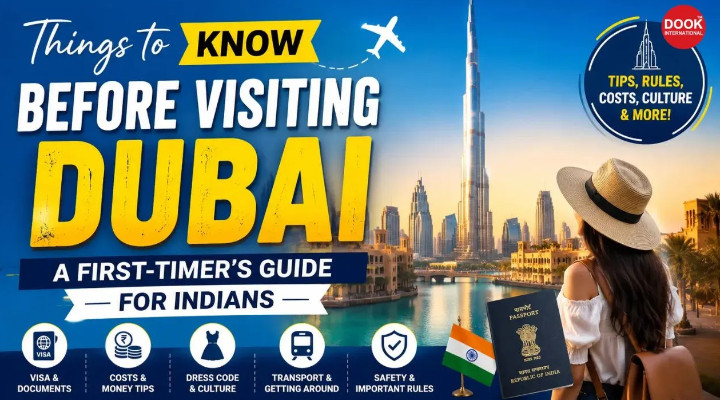
Dubai sits barely three and a half hours from most Indian metros, yet it feels like landing on a different planet — glass towers rising out of desert sand, six-lane highways next to centuries-old souks, and a shopping mall with an indoor ski slope. For Indian travellers, it's one of the easiest "international" trips to plan, but easy doesn't mean effortless. A few overlooked details — visa timing, currency habits, dress codes, or the sheer summer heat — can quietly derail an otherwise perfect holiday.
This guide covers everything Indians actually need to know before visiting Dubai for the first time: from visa rules and costs to culture, safety, and how to think about Dubai tour packages if you'd rather not plan it all yourself.
1. Yes, Indians Need a Visa — Plan for It Early
This is the single most important item on any things to know before visiting Dubai checklist. Indian passport holders cannot enter the UAE visa-free. Every Indian traveller needs either a pre-arranged tourist visa or, in limited cases, a visa on arrival.
Visa on arrival is only available if you already hold a valid US visa, a Green Card, or a valid visa/residence permit from the UK, EU, Australia, Canada, Japan, New Zealand, South Korea, or Singapore (with at least six months' validity remaining). If none of that applies to you, you must apply for a UAE tourist visa in advance — this covers the vast majority of first-time Indian travellers.
Typical visa options and costs for Indians (2026):
Visa Type | Validity | Approx. Cost (INR) | Processing Time |
14-day tourist visa | 14 days | ₹6,000 – ₹7,500 | 3–4 working days |
30-day single entry | 30 days | ₹7,500 – ₹8,500 | 3–4 working days |
30-day express | 30 days | ₹12,000 – ₹13,000 | 24 hours |
60-day single/multiple entry | 60 days | ₹13,000 – ₹17,500 | 3–4 working days |
Fees vary by agent and airline and can change without notice, so always confirm the current price before paying. You'll typically need a passport valid for six months beyond your travel date, a passport-style photo, confirmed hotel bookings, and a return flight ticket. Many airlines (Emirates, IndiGo, Air India) and travel agents can process this for you alongside your flight booking, which is often the simplest route when planning a trip to Dubai for the first time.
Practical tip: Apply at least 2–3 weeks before travel. Rejections usually come down to mismatched personal details, unclear photos, or unconfirmed hotel/flight bookings — not because Dubai is hard to get into.
2. Best Time to Visit Dubai From India
Dubai has essentially two seasons that matter for tourists: bearable and brutal.
November to March — the sweet spot. Daytime temperatures sit between 20–30°C, evenings are pleasant, and this is peak season for outdoor activities like desert safaris, beach days, and the Dubai Shopping Festival (typically December–January).
April to October — extremely hot, with temperatures regularly crossing 40–45°C and high humidity. Outdoor sightseeing becomes uncomfortable, though hotel and flight prices drop noticeably, and indoor attractions (malls, aquariums, indoor ski slopes) remain fully enjoyable.
If your dates are flexible, winter is the better first-timer experience. If you're travelling in summer for budget reasons, lean into indoor attractions and plan outdoor activities for early morning or after sunset.
3. Currency, Cash, and Card Habits
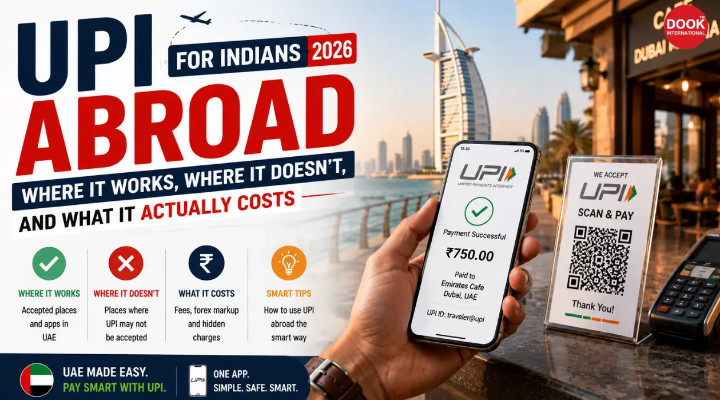
The local currency is the UAE Dirham (AED). As of mid-2026, 1 AED is roughly ₹25–26, though this fluctuates daily — always check a live rate before your trip rather than relying on a fixed number.
A few money habits that make a real difference:
Convert some cash before you leave India. Indian regulations allow you to carry only up to ₹25,000 in cash out of the country, so exchanging a portion of your budget into AED at home (via banks or RBI-authorised forex dealers) usually gets you a better rate than exchanging in Dubai.
Cards are widely accepted, including at souks and taxis, but a small percentage of Dubai remains cash-friendly for tips, small vendors, and local transport top-ups.
International transaction fees apply to Indian debit/credit cards (typically 2–3.5%), so a multi-currency forex card can save money on larger spends.
Tipping isn't mandatory but is appreciated — 10–15% at restaurants if service charge isn't already included, and small tips for taxi drivers and hotel staff are customary.
4. Dubai Is Liberal, But Local Laws Still Apply
Dubai is one of the more relaxed emirates for tourists, but it operates under UAE law, which differs meaningfully from what Indian travellers may be used to elsewhere.
Dress code: Beachwear and shorts are fine at beaches, pools, and clubs, but modest clothing (covering shoulders and knees) is expected at malls, mosques, government buildings, and traditional neighbourhoods like Al Fahidi or Deira.
Alcohol: Available legally in licensed hotels, bars, and restaurants for those over 21. Public intoxication and drinking in unlicensed public spaces are offences.
Public affection: Holding hands is generally fine; kissing or overt affection in public can draw unwanted attention or fines.
Photography: Avoid photographing people, especially local women, without consent, and be cautious around government or military installations.
Ramadan etiquette: If visiting during Ramadan, eating, drinking, or smoking in public during daylight hours is restricted for everyone, though most restaurants operate discreetly for tourists.
None of this should feel intimidating — millions of Indians visit Dubai every year without incident — but knowing the boundaries in advance avoids awkward situations.
5. Getting Around: Dubai Is Built for Movement
Dubai's public transport is efficient, clean, and genuinely tourist-friendly, which is unusual for a Gulf city.
Dubai Metro connects most major attractions — Burj Khalifa, Dubai Mall, Marina, and the airport — and is by far the cheapest way to get around.
Nol Card is a rechargeable travel card usable on the metro, buses, and water taxis (abras).
Taxis and ride-hailing apps (Careem, Uber) are metered, reliable, and reasonably priced compared to Indian metro cities on a per-kilometre basis.
Renting a car is straightforward with an Indian driving licence in many cases, though an International Driving Permit is safer to carry, and Dubai's roads (and speed cameras) are unforgiving of traffic violations.
6. Where First-Timers Should Actually Go
For a first visit, most Indian travellers gravitate toward a fairly predictable — but genuinely worthwhile — set of experiences:
Burj Khalifa — book "At the Top" tickets online in advance; walk-in prices are noticeably higher.
Dubai Mall & Dubai Fountain — combine shopping with the free evening fountain show.
Desert safari — dune bashing, camel rides, and a BBQ dinner under the stars; widely bundled into Dubai tour packages.
Old Dubai — Al Fahidi Historic District, the Gold Souk, and an abra ride across Dubai Creek for a contrast to the modern skyline.
Beaches — JBR and Kite Beach are popular, free, and family-friendly.
Global Village (seasonal, Oct–April) — a favourite with Indian families for its cultural pavilions and food.
7. Should You Book Dubai Tour Packages or DIY It?
This is where most first-timers get stuck. Both approaches work well — the right choice depends on your travel style.
Dubai tour packages (through Indian travel agents or UAE-based operators) typically bundle visa processing, flights, hotel stays, airport transfers, and key activities like a desert safari or city tour into one price. They're worth considering if you want predictable costs, minimal planning effort, or are travelling with family/elderly members who'd benefit from guided logistics.
DIY planning works well if you're comfortable booking visas, hotels, and attraction tickets separately, and want more flexibility on timing and budget. It's often cheaper for solo or budget travellers willing to put in the research.
A hybrid approach — booking flights and hotels yourself but adding a packaged desert safari or city tour is increasingly common and gives you the best of both.
8. Budgeting a First Trip
Costs vary widely by hotel category and appetite for activities, but a rough framework for a 4–5 day trip per person (excluding international flights) looks like this:
Budget: ₹35,000 – ₹50,000 (3-star stays, public transport, street/mall food, one or two paid attractions)
Mid-range: ₹60,000 – ₹90,000 (4-star hotels, mix of taxis and metro, a desert safari, Burj Khalifa visit)
Premium: ₹1,20,000+ (5-star stays, private tours, fine dining, multiple premium attractions)
Dubai can be as expensive or as reasonable as you make it — the city has both ultra-luxury and genuinely affordable experiences side by side.
9. Health, Safety, and Practical Odds and Ends
Safety: Dubai is consistently rated among the safest cities globally for tourists, with low street crime. Standard travel precautions still apply.
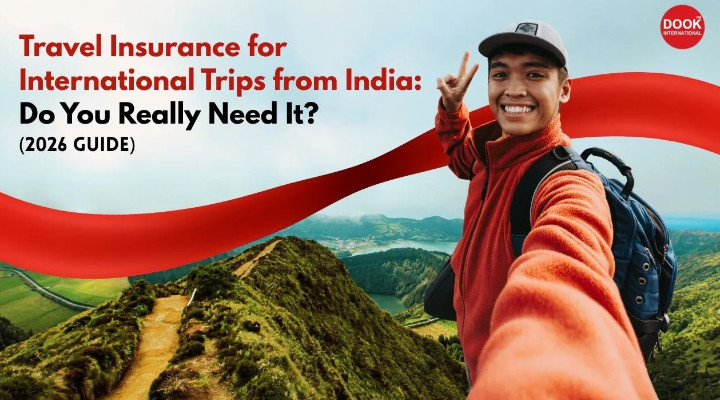
Travel insurance: Not mandatory for most tourist visa categories, but strongly recommended given how expensive private healthcare in Dubai can be.
SIM cards: Available at the airport (Etisalat/du) for affordable data and local calling; many hotels also offer reliable Wi-Fi.
Language: English is spoken almost everywhere, and Hindi/Urdu are widely understood given the large South Asian population — communication is rarely a barrier.
Time difference: Dubai is 1.5 hours behind India (IST), useful to know for flight timings and calls home.
Emergency numbers: 999 (police), 998 (ambulance), 997 (fire).
Final Thoughts
Dubai rewards a little preparation more than most destinations — get the visa timeline and season right, understand the basic cultural expectations, and the rest of the trip tends to fall into place easily thanks to the city's excellent infrastructure. Whether you choose to book everything yourself or go with one of the many Dubai tour packages aimed at Indian travellers, the fundamentals above will help you avoid the most common first-timer mistakes and spend your energy on actually enjoying the city.
 Admin
Admin 















 Hassle-free booking and best price guaranteed
 24/7 support available
 Hand-picked tours & activities
 Free travel insurance
 sales@dooktravels.com
 +918368513675