


Written by the Dook International Russia Destination Expert Team — 13 years of crafting Russia Northern Lights tour packages for Indian travellers
Why Murmansk Is the World's Best Destination to See the Northern Lights
Not all Northern Lights destinations are equal. Tromsø in Norway gets most of the international attention. Rovaniemi in Finland gets the Christmas tourism. But for Indian travellers planning a trip to see the Northern Lights in Russia, Murmansk is the destination that delivers the most powerful, most accessible, and most completely immersive aurora experience available anywhere in the world.
Murmansk sits at 68.58°N — well above the Arctic Circle — on the Kola Peninsula in northwestern Russia, where the Barents Sea meets the Norwegian Sea, and the geomagnetic latitude aligns almost perfectly with the oval of maximum aurora activity. It is the world's largest city above the Arctic Circle, with a population of approximately 280,000 people and an infrastructure built for year-round habitation in one of the world's most extreme climates.
For Indian travellers planning a Northern Lights trip to Murmansk, 2026 is the most important year in the last decade. Solar Cycle 25 — the current 11-year cycle of solar activity — is reaching its maximum in 2025–2026, producing the most powerful and most frequent geomagnetic storms in a decade. This means more nights of visible Northern Lights, more intense displays, and more of the rare multi-coloured aurora events (green, red, purple, and white simultaneously) that aurora photographers travel their entire lives to photograph.
The window is now. This guide covers everything Indian travellers need to plan the perfect Murmansk Northern Lights trip from India.
Understanding the Northern Lights — What You Are Actually Seeing
Before planning a trip to Murmansk for the Northern Lights, it helps to understand what causes them — because travellers who understand the physics find the experience significantly more profound.
The Northern Lights (Aurora Borealis) are caused by electrically charged particles from the sun — primarily protons and electrons — travelling at speeds of up to 1 million km/h through the solar wind and colliding with gas molecules in the earth's upper atmosphere. These collisions release energy as light — the oxygen molecules at 100–300 km altitude produce the characteristic green aurora, while oxygen at higher altitudes (above 300 km) produces rare red displays, and nitrogen molecules produce blue and purple colours.
The intensity of the aurora depends on the strength of the solar wind and the corresponding geomagnetic activity — measured on the Kp index from 0 to 9. A Kp of 4 or above produces visible Northern Lights in Murmansk. During Solar Cycle 25's peak in 2025–2026, Kp events of 6, 7, and even 8 are occurring significantly more frequently than in previous years — producing aurora displays that light the entire sky in multiple colours and are visible even through moderate cloud cover.
The practical advice: check the aurora forecast at SpaceWeather.com and the Space Weather Prediction Centre daily during your Murmansk visit. The best displays occur 1–3 days after a significant solar flare event, which are predictable 48–72 hours in advance.
Best Time to Plan a Trip to Murmansk for the Northern Lights
The Northern Lights season in Murmansk runs from September to March — the window when the nights are dark enough for aurora viewing. Within this season, there are three distinct experience windows, each offering a different character:
Period | Months | Experience |
Early Season | September to October | Shortest dark nights but mild temperatures (–5 to –10°C). First snows. Best for travellers who want the aurora without extreme cold. |
Polar Night | Late November to January | The sun does not rise above the horizon. 24-hour darkness. Most dramatic and most atmospheric aurora season. Temperature –15 to –25°C. |
Peak Aurora | February to March | Best combination of darkness, snow activities, and manageable temperatures. Lengthening days return. Most popular window for Indian travellers. |
Best overall recommendation for Indian travellers planning a Murmansk Northern Lights trip: February and early March — the days are beginning to lengthen, so you experience both darkness for aurora and daylight for activities, temperatures are –10 to –20°C (manageable with proper gear), and the snow is at its deepest for husky safaris and snowmobile excursions.
Places to Visit in Murmansk — The Complete Attraction Guide
1. Alyosha Monument — The Guardian of the Arctic
The Alyosha Monument is the most recognisable landmark in Murmansk — a 35-metre concrete statue of a Soviet World War II soldier standing on Zayachy Hill above the city, facing north toward the Barents Sea. Built in 1974 to commemorate the Soviet soldiers who defended the Kola Peninsula from German forces during World War II, the Alyosha statue is visible from virtually every point in Murmansk and provides, from its hilltop base, one of the finest panoramic views of the city, the Kola Bay, and the surrounding Arctic tundra.
Visiting at twilight during the Polar Night season — when the sky is perpetually dark, and the city lights reflect off the snow below — is one of Murmansk's most atmospheric experiences.
Best for: All traveller types | Panoramic city photography | Historical interest
Ideal duration: 45 minutes to 1 hour
2. Lenin Nuclear Icebreaker Museum — The Most Extraordinary Industrial Heritage in Russia
The Lenin Nuclear Icebreaker — permanently moored at Murmansk's commercial port — is one of the most remarkable museum ships in the world. Launched in 1959 as the world's first nuclear-powered surface vessel, the Lenin broke ice in the Arctic for over 30 years, opening the Northern Sea Route for year-round navigation and establishing Russia's dominance in Arctic maritime technology.
The guided tour of the ship covers the nuclear reactor compartments, the navigation bridge, crew quarters, dining rooms, and the extraordinary engineering spaces that housed the world's first civilian nuclear propulsion system. The tour gives visitors a genuinely rare insight into Soviet-era engineering ambition and the daily reality of life in the Arctic aboard a nuclear-powered vessel.
When planning a trip to Murmansk for the Northern Lights, the Lenin Icebreaker is the single most unique non-aurora attraction in the city and should be on every itinerary.
Best for: All traveller types | Engineering and history enthusiasts | Children aged 8 and above
Ideal duration: 1.5–2 hours
3. Murmansk Regional Museum — The Story of the Kola Peninsula
The Murmansk Regional Museum (Краеведческий музей) is the finest introduction to the history, natural environment, and indigenous culture of the Kola Peninsula. The museum's collections cover the region's indigenous Sami people (one of the world's oldest continuous reindeer-herding cultures), the natural history of the Barents Sea and Arctic ecosystem, the extraordinary story of Murmansk's founding in 1916 as Russia's only ice-free Arctic port, and the city's role in World War II as the northern terminus of the Allied supply convoys.
For Indian travellers visiting Murmansk for the first time, the Regional Museum provides the historical and ecological context that makes the subsequent aurora excursions and natural landscape experiences significantly more meaningful.
Best for: Cultural and history travellers | First-time Murmansk visitors
Ideal duration: 1.5–2 hours
4. Lake Semyonovskoye — The Aurora Viewing Lake
Lake Semyonovskoye is a small, beautifully situated lake in the hills immediately south of Murmansk city centre — one of the most popular local recreational areas in Murmansk and, during the aurora season, one of the finest aurora viewing locations accessible without leaving the city.
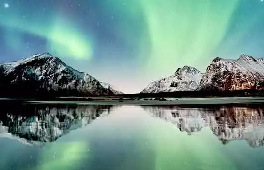
The lake's dark, open water surface (which partially freezes in midwinter, partially remains open in spring) reflects the aurora above it, creating a double image of the dancing lights that produces some of the finest Northern Lights photographs taken near Murmansk. The surrounding hillside is free of the light pollution of the city centre, giving clear dark sky conditions that are essential for aurora viewing.
In winter, the lake's surroundings are used for cross-country skiing and sledging. In spring (March onwards), the lake becomes the central venue for the Murmansk ski marathon — one of Russia's oldest cross-country ski competitions.
Best for: Aurora photography | Nature walks | Couples and families
Ideal duration: 2–3 hours (evening visit for aurora viewing)
5. Husky Safari — The Arctic Dog Sledge Experience
The husky safari is the single most popular activity for Indian travellers planning a trip to Murmansk — and the one that generates the most consistently enthusiastic feedback in Dook International's post-tour surveys.
Murmansk's husky farms — located in the forests and tundra outside the city centre, typically 30–60 minutes by transfer from the main hotels — offer the full range of dog sled experiences: from a short introductory ride behind a team of Siberian and Alaskan huskies through the Arctic forest, to a 2–3 hour guided husky safari through the tundra landscape that includes the opportunity to drive your own sled under guide supervision.
The combination of the husky safari with a Northern Lights evening excursion — returning to the farm after the sledge experience for an outdoor aurora viewing session around a bonfire — is one of the most perfectly designed experiential combinations in Arctic tourism and is standard in Dook International's Murmansk Northern Lights itinerary.
Best for: All traveller types | Children aged 5 and above
Best time: December to March (snow season)
Ideal duration: 2–4 hours, depending on experience type
6. Reindeer Farm — Meeting the Kola Sami People
The reindeer farms of the Murmansk region are operated by the indigenous Kola Sami people — one of Russia's recognised indigenous ethnic minorities, whose reindeer herding culture on the Kola Peninsula dates back thousands of years. Visiting a Sami reindeer farm gives Indian travellers an experience of genuine cultural and wildlife depth that is available in very few places outside the Arctic.
The experience includes meeting and feeding the reindeer (some of which are remarkably tame and approachable), learning about the Sami reindeer herding traditions and seasonal migration patterns, visiting a traditional Sami dwelling (lavvu), and, in most cases, trying traditional Sami foods, including reindeer meat soup and cloudberry jam.
For Indian vegetarian travellers visiting the farm for the cultural and wildlife experience (rather than the food), the reindeer feeding and Sami culture aspects alone create one of the most memorable cultural encounters available on any Russia Northern Lights tour.
Best for: Cultural travellers | Nature enthusiasts | Families | All traveller types
Best time: November to March
Ideal duration: 3–4 hours, including transfer
7. Northern Lights Aurora Excursion — The Main Event
The guided Northern Lights excursion is the centrepiece of every Murmansk Northern Lights tour and the primary reason Indian travellers make the journey to the Arctic Circle.
Aurora excursions from Murmansk are typically conducted in two formats:
Countryside excursion — A transfer by minibus 30–60 minutes outside the city to a designated aurora viewing location away from light pollution, where a guide monitors the Kp forecast and provides information on the aurora while the group photographs and observes the display. Hot tea and warming food are provided. Duration: 3–4 hours.
Combined excursion with activity — Aurora viewing combined with a snowmobile excursion, husky safari, or reindeer farm visit — the most popular format for Indian travellers who want the Northern Lights experience woven into a broader Arctic adventure.
What to realistically expect: The Northern Lights cannot be guaranteed on any single night. The aurora forecast indicates probability, not certainty — cloud cover can obscure even the strongest auroras. Standard Murmansk Northern Lights packages include 2–3 dedicated aurora excursion nights to maximise the probability of at least one clear-sky display. Over a 3-night stay in Murmansk, approximately 80–85% of visitors see the Northern Lights at least once during Solar Cycle 25 peak conditions (2025–2026).
Best time: 9 PM to 2 AM (peak aurora activity hours)
Best months: September to March | February for the best conditions combination
8. Snowmobile Safari — Across the Arctic Tundra
The snowmobile safari — available at several operators outside Murmansk between November and March — is one of the most exhilarating active experiences available in the Arctic. Groups travel by snowmobile in single file through the birch forests and open tundra of the Kola Peninsula, covering distances of 20–60 km depending on the tour format, with stops at scenic viewpoints, frozen lake surfaces, and Sami cultural sites.
No prior snowmobile experience is required — a 15-minute guided introduction is provided at the start, and the terrain is suitable for beginners at standard tour speeds. For more experienced riders, specialist backcountry tours at higher speeds through more challenging terrain are available on request.
Best for: Adventure travellers | Adrenaline seekers | All adults and teenagers
Best time: December to March
Ideal duration: 2–4 hours
Beyond Murmansk — The Complete Russia Circuit: Moscow and Saint Petersburg
Indian travellers planning a Northern Lights Russia trip who combine Murmansk with Moscow and Saint Petersburg have the most complete and most rewarding Russia experience available in a single itinerary. Dook International's 7 Nights 8 Days Russia Northern Lights Tour covers all three cities in a circuit that combines the cultural greatness of European Russia with the Arctic drama of the Kola Peninsula.
Moscow — The Imperial Capital
Red Square and the Kremlin
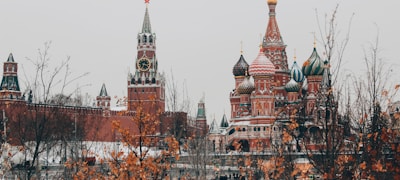
Red Square is the most iconic urban space in Russia — the ceremonial heart of Moscow where the ancient Kremlin walls, the luminous domes of St. Basil's Cathedral, the GUM department store facade, and the Lenin Mausoleum converge in an ensemble of extraordinary historical and architectural power.
The Moscow Kremlin — the 15th-century fortified complex that has served as the seat of Russian power for over 500 years — contains within its walls the Armoury Chamber (Russia's oldest museum, housing Tsarist regalia, Fabergé eggs, and ceremonial carriages), the Great Kremlin Palace, and three extraordinary cathedrals. The view from the Kremlin walls across the Moscow River to the Cathedral of Christ the Saviour is one of Moscow's finest panoramas.
Sparrow Hills — Moscow's Greatest Viewpoint
Sparrow Hills is the highest natural elevation in Moscow — a forested escarpment on the right bank of the Moscow River from which the entire city spreads north in an uninterrupted panorama. The viewpoint terrace, immediately in front of Moscow State University's iconic Stalinist skyscraper, gives the finest single city view in Moscow — the river bend, the Olympic stadium, the towers of the Moscow City financial district, and the Kremlin domes all visible simultaneously.
Cathedral of Christ the Saviour — Russia's Largest Church
The Cathedral of Christ the Saviour is the largest Orthodox church in Russia — a massive white-marble domed cathedral on the Moscow River embankment, rebuilt between 1990 and 2000 after the original 19th-century cathedral was demolished by Stalin in 1931. The cathedral's gilded domes, visible from across the Moscow skyline, and its interior of extraordinary decorative richness make it one of Moscow's most visited and most photographed religious sites.
Metro Victory Park — Moscow's Underground Art
The Moscow Metro stations deserve their own line in every Moscow itinerary. The Pobedy Park (Victory Park) metro station — one of the deepest metro stations in the world at 84 metres below ground — is among the finest examples of Soviet monumental architecture in the Moscow Metro system. The escalator descent alone (nearly 3 minutes) through the illuminated granite tunnel is one of Moscow's most unexpectedly atmospheric experiences.
Saint Petersburg — The Cultural Capital of Russia
The Hermitage Museum
The State Hermitage Museum is one of the world's three greatest art museums — housing over 3 million items across the Winter Palace and five adjacent buildings on the Neva embankment. The collection spans 3 million years of human civilisation: Scythian gold from the 7th century BC, Leonardo da Vinci paintings, Rembrandt masterworks, the finest collection of French Impressionist and Post-Impressionist art outside Paris, and the extraordinary Jordan Staircase of the Winter Palace itself — one of the most spectacular architectural spaces in Russian Baroque design.
For Indian travellers visiting Saint Petersburg as part of a Murmansk Northern Lights circuit, the Hermitage alone justifies a full day's visit — and most experienced travellers recommend 4–5 hours for a focused selection of the collection's greatest works.
Church of the Saviour on Blood
The Church of the Saviour on Blood (Khram Spasa na Krovi) is the most dramatically beautiful church in Saint Petersburg — a multi-domed Russian Revival structure built on the exact site of the assassination of Tsar Alexander II in 1881, its exterior covered in coloured tile mosaics and its interior housing the largest mosaic collection in Russia covering 7,500 square metres of wall and ceiling surfaces.
The church is visible from the Griboedov Canal embankment in a composition that is one of Saint Petersburg's most photographed urban views — the canal, the ornate bridge, and the church's onion domes creating a scene that looks painted rather than photographed.
Kazan Cathedral, Saint Petersburg
The Kazan Cathedral on Nevsky Prospect is one of Saint Petersburg's grandest religious buildings — a neoclassical cathedral modelled on St. Peter's Basilica in Rome, with a sweeping semicircular colonnade of 96 Corinthian columns flanking the Nevsky Prospect pavement. The cathedral houses one of Russia's most revered icons — the Kazan Icon of the Mother of God — and the tomb of Field Marshal Kutuzov, the Russian commander who defeated Napoleon's invasion of Russia in 1812.
Bronze Horseman — Saint Petersburg's Iconic Monument
The Bronze Horseman — the equestrian statue of Peter the Great in Senate Square — is Saint Petersburg's most famous monument and the most celebrated public sculpture in Russia. Cast in 1782 by Étienne Maurice Falconet, the statue shows Peter the Great on a rearing horse atop a massive granite boulder, pointing toward the Neva River and the west. Pushkin's 1833 poem "The Bronze Horseman" — one of the masterworks of Russian literature — was written about this statue, cementing its place in Russian cultural identity.
Peter and Paul Cathedral
The Peter and Paul Cathedral within the Peter and Paul Fortress is the burial place of the Romanov Tsars — virtually every Russian monarch from Peter the Great (who founded Saint Petersburg and commissioned the fortress in 1703) to Nicholas II (whose remains were interred here in 1998, 80 years after his execution) is buried within the cathedral's marble-lined interior. The cathedral's gold spire — the tallest church spire in Russia at 122 metres — is the most recognisable element of the Saint Petersburg skyline when seen from the Neva River.
Saint Isaac's Bridge and the Admiralty Building
Saint Isaac's Bridge spans the Neva River in Saint Petersburg's historic centre — the most photographed pedestrian bridge in the city, giving extraordinary views of the Winter Palace, the Hermitage, and the Peter and Paul Fortress simultaneously from its mid-point. The Admiralty Building — the former seat of the Imperial Russian Navy, its golden spire visible from every major boulevard in Saint Petersburg — was built in 1823 and anchors the western end of the city's central ensemble. Walking from the Admiralty to the Bronze Horseman to Saint Isaac's Cathedral along the embankment is the finest 30-minute heritage walk in Saint Petersburg.
Church of the Saviour on the Waters
The Church of the Saviour on the Waters is a lesser-known but exceptionally beautiful Saint Petersburg church — a red-brick neo-Russian style church built on the Lieutenant Schmidt Embankment in 1910 as a memorial to the Russian sailors killed in the Russo-Japanese War. Its location directly on the Neva River, its distinctive brick and white stone decoration, and the relatively small crowds it receives compared to the major tourist sites make it one of Saint Petersburg's finest discoveries for travellers who go slightly beyond the standard circuit.
Ready-to-Use Russia Northern Lights Itinerary — 8 Days 7 Nights
Based on Dook International's Moscow + Saint Petersburg + Murmansk 7 Nights 8 Days Russia Northern Lights Tour Package:
Day 1 — Arrival in Moscow
Arrive at Moscow's Sheremetyevo or Domodedovo International Airport. Transfer to the hotel. Evening at leisure — walk along the Moscow River embankment for the first views of the Kremlin and Cathedral of Christ the Saviour illuminated across the water. Welcome dinner.
Day 2 — Moscow City Tour
Full day Moscow city tour: Morning visit to Red Square and St. Basil's Cathedral. Kremlin guided tour (Armoury Chamber and Cathedrals). After lunch, the Cathedral of Christ the Saviour and the Moscow River embankment. Afternoon visit to Sparrow Hills viewpoint and Moscow State University. Evening: Metro Victory Park station visit and Arbat Street for dinner and souvenir shopping. Overnight in Moscow.
Day 3 — Moscow to Saint Petersburg
Morning transfer from Moscow to Saint Petersburg by the Sapsan high-speed train (3.5–4 hours — one of Russia's finest travel experiences). Arrival and check-in. Afternoon: First walk along Nevsky Prospect — the Bronze Horseman, the Admiralty Building, and the Kazan Cathedral exterior. Evening: Canal boat tour on the Griboedov and Fontanka canals with the Church of the Saviour on Blood illuminated at dusk. Dinner in Saint Petersburg.
Day 4 — Saint Petersburg Heritage Tour
Morning: Hermitage Museum — 4 hours for the essential collection highlights (Impressionists, Scythian Gold, Jordan Staircase, Leonardo da Vinci works). After lunch: Church of the Saviour on Blood interior and Peter and Paul Fortress with the Cathedral and Romanov tombs. Late afternoon: Saint Isaac's Bridge walk, Church of the Saviour on Waters, and Admiralty Building exterior. Evening at leisure on Nevsky Prospect.
Day 5 — Saint Petersburg to Murmansk
Morning: Final Saint Petersburg morning at leisure. Transfer to Pulkovo Airport for a domestic flight to Murmansk. Arrival at Murmansk Airport. Transfer to the hotel. Evening orientation walk — Alyosha Monument viewpoint for the first panoramic view of Murmansk and the Kola Bay. First Northern Lights Aurora Excursion outside the city (weather and aurora forecast permitting — Kp monitoring begins from arrival). Overnight Murmansk.
Day 6 — Murmansk Exploration | Lenin Icebreaker | Husky Safari
Morning: Lenin Nuclear Icebreaker Museum guided tour (1.5–2 hours). Lunch at the hotel. Afternoon: Murmansk Regional Museum for the Kola Peninsula history and Sami culture exhibition. Lake Semyonovskoye walk in the afternoon light. Evening: Husky safari at a farm outside Murmansk — dog sledge ride through the Arctic forest, followed by outdoor Northern Lights viewing around the farm bonfire. Overnight Murmansk.
Day 7 — Reindeer Farm | Snowmobile Safari | Northern Lights Aurora Excursion
Morning: Reindeer farm visit — feeding, Sami cultural experience, and lavvu visit. Lunch at the hotel. Afternoon rest. Early evening: Snowmobile safari across the tundra (2–3 hours). Late evening: Dedicated Northern Lights aurora excursion to the best available viewing location based on Kp forecast — guides remain out until aurora activity is confirmed or until 2 AM. This is the primary aurora viewing night of the itinerary. Overnight Murmansk.
Day 8 — Departure from Murmansk
Breakfast at the hotel. Final morning at leisure — last aurora check if conditions are favourable for a morning display (rare but possible during strong Kp events). Transfer to Murmansk Airport. Departure. End of the Russia Northern Lights Tour.
Russian Food Guide — What Indian Travellers Need to Know in Murmansk
Must-Try Russian Dishes in Murmansk
Ukha (Russian Fish Soup) — Murmansk's most essential and most authentic dish. A clear, richly flavoured broth made from the fresh Arctic fish of the Barents Sea — cod, pollock, and salmon — with root vegetables and dill. Every Russian family in Murmansk has its own ukha recipe. This dish is the defining food experience of the Arctic city and is served at virtually every traditional restaurant.
Pelmeni — Russia's most beloved comfort food — small dumplings of thin pasta dough filled with minced meat (beef, pork, or reindeer in Murmansk), served with sour cream and butter. Murmansk's reindeer pelmeni are a regional speciality unique to the Kola Peninsula.
Reindeer Meat Dishes — Available throughout Murmansk in various preparations — roasted, smoked, in soups, and as stroganoff. Reindeer meat is lean, mild, and deeply sustainable — a Sami culinary tradition that has been central to Kola Peninsula food culture for millennia.
Salted and Smoked Barents Sea Fish — Murmansk is Russia's primary Arctic fishing port, and the fresh, salted, and smoked fish available at the city's fish market and restaurants is of extraordinary quality. The lightly salted Barents Sea salmon — prepared in the Scandinavian-influenced cold-cured style — is among the finest fish preparations available in Russia.
Blini with Caviar and Sour Cream — Russia's iconic thin pancakes served with red or black caviar and sour cream — available at traditional restaurants throughout Murmansk. Red caviar (salmon roe) from the Barents Sea is significantly more affordable in Murmansk than in Moscow or Saint Petersburg and is one of the city's finest food souvenirs.
Borscht — Russia's great beetroot soup, served with a generous spoonful of smetana (sour cream) — warming, hearty, and deeply vegetarian-friendly in its standard preparation (though meat versions are common — always confirm when ordering).
Vegetarian, Indian, and Jain Food in Murmansk — The Honest Guide
This is one of the most important practical sections for Indian travellers planning a trip to Murmansk for the Northern Lights, because Murmansk is a remote Arctic city, not an international tourism hub, and food accessibility requires honest management.
Vegetarian Food in Murmansk
Murmansk is not a vegetarian-friendly city by international tourism standards. Russian Arctic cuisine is heavily fish and meat-oriented. However, vegetarian options do exist:
Naturally vegetarian Russian dishes: Borscht (request without meat), solyanka (ask for mushroom version), various mushroom and potato dishes, salads, blini with cheese or jam, and a wide range of dairy products (excellent Russian kefir, smetana, and tvorog/cottage cheese) available at supermarkets throughout the city.
Supermarket self-catering: The Magnit and Pyaterochka supermarket chains have locations throughout Murmansk and carry a reasonable range of vegetarian-friendly products, including Indian instant meals, dal mixes, rice, and bread. For Indian travellers who carry emergency travel food (instant rice, khichdi packets, or ready-to-eat Indian meals), Murmansk's supermarkets are well-stocked for supplementary self-catering.
Indian Food in Murmansk
There are no dedicated Indian restaurants in Murmansk. This is the most important food reality for Indian travellers to accept when planning a trip to Murmansk — unlike Moscow or Saint Petersburg (which both have good Indian restaurant scenes), Murmansk's small size and remote location mean that Indian cuisine is not commercially available.
Dook International's solution: All Dook International Russia Northern Lights tour packages include pre-arranged Indian meal preparation at partner hotels in Murmansk. Our tour coordination team communicates specific Indian dietary requirements (vegetarian, Jain, egg-only) to hotel kitchen staff in advance, ensuring that dal, rice, roti, and basic Indian meal options are available for every dinner and breakfast during the Murmansk segment. This service is one of the most valued elements of Dook International's Russia packages for Indian travellers.
Jain Food in Murmansk
Strictly Jain food (no onion, no garlic, no root vegetables) is the most challenging dietary requirement to accommodate in Murmansk. Dook International's approach for Jain travellers:
Pre-travel communication of Jain requirements to all partner hotels. Hotel kitchen briefing in Russian (translated by Dook International's Russia team) specifying no onion, no garlic, and no root vegetable ingredients. Basic Jain-compatible dishes — steamed rice, simple dal (prepared without onion and garlic on request), stir-fried vegetables, roti — can be arranged at Murmansk partner hotels with sufficient advance notice. Jain travellers are strongly advised to carry sufficient quantities of packaged Jain-certified dry foods and instant meals as supplementary provisions.
Best Time to Visit Murmansk from India — Month by Month
Month | Temperature | Darkness | Aurora Probability | Best For |
September | –2 to –8°C | Returning nights | Moderate | First auroras, autumn colours |
October | –5 to –12°C | Long dark nights | Good | Strong auroras, fewer tourists |
November | –8 to –18°C | Polar Night begins | Very Good | Polar Night experience begins |
December | –12 to –22°C | Full Polar Night | Excellent | Most dramatic darkness, Christmas atmosphere |
January | –15 to –25°C | Full Polar Night | Excellent | Coldest month — for serious aurora chasers |
February | –10 to –20°C | Lengthening | Peak | Best overall — great auroras + all snow activities |
March | –5 to –15°C | Good darkness | Very Good | Warming, lengthening days, excellent activities |
Best month for Indian travellers: February — optimal balance of aurora probability, snow activity availability, and manageable temperatures. Dook International's Murmansk Northern Lights tour packages are most heavily booked in February.
Murmansk Travel Essentials for Indian Travellers
Visa: Russia Tourist Visa required for Indian passport holders. Invitation letter from a certified Russian tour operator (provided by Dook International for all Russia tour package clients). Processing time: 5–10 working days. Apply at least 3–4 weeks before travel.
Currency: Russian Ruble (RUB). Cash is preferred for smaller purchases. ATMs are available throughout the Murmansk city centre.
Language: Russian — English is not widely spoken in Murmansk outside major hotels. Dook International's English-speaking guides accompany all tours.
Cold weather gear: Temperatures of –15 to –25°C require proper thermal layering. Essential items: thermal base layers, mid-layer fleece, waterproof outer layer, thermal boots (rated to –30°C), insulated gloves, balaclava, and thermal hat. Most Murmansk tour operators provide outer layer gear for aurora excursions, but personal thermal base layers must be brought from India.
Plan Your Northern Lights Russia Tour with Dook International
Planning a trip to Murmansk for the Northern Lights requires specialist knowledge — understanding which aurora forecast tools to use, which excursion operators have the best safety records, how to arrange Indian meals in an Arctic city, and how to combine Murmansk with Moscow and Saint Petersburg in a single well-structured itinerary.
With 13 years of crafting Russia Northern Lights tour packages for Indian travellers and over one million happy clients, Dook International's Russia specialists have personal experience of the Murmansk aurora, the Lenin Icebreaker, the husky farms, and the reindeer camps — and every detail of the Russia Northern Lights circuit is designed from genuine on-ground expertise.
Our most popular Russia Northern Lights tour packages:
Moscow + Saint Petersburg — 4 Nights 5 Days (without Northern Lights)
Moscow + Saint Petersburg — 5 Nights 6 Days
Moscow + Saint Petersburg — 6 Nights 7 Days
Murmansk Northern Lights Only — 3 Nights 4 Days extension package
Written and verified by the Dook International Russia Destination Expert Team. All aurora conditions, visa requirements, activity details, food guidance, and seasonal recommendations are verified as of April 2026. Dook International — 13 years of expertise | 1,000,000+ happy travelers | 011-40001000 | sales@dooktravels.com
 Admin
Admin 















 Hassle-free booking and best price guaranteed
 24/7 support available
 Hand-picked tours & activities
 Free travel insurance
 sales@dooktravels.com
 +918368513675